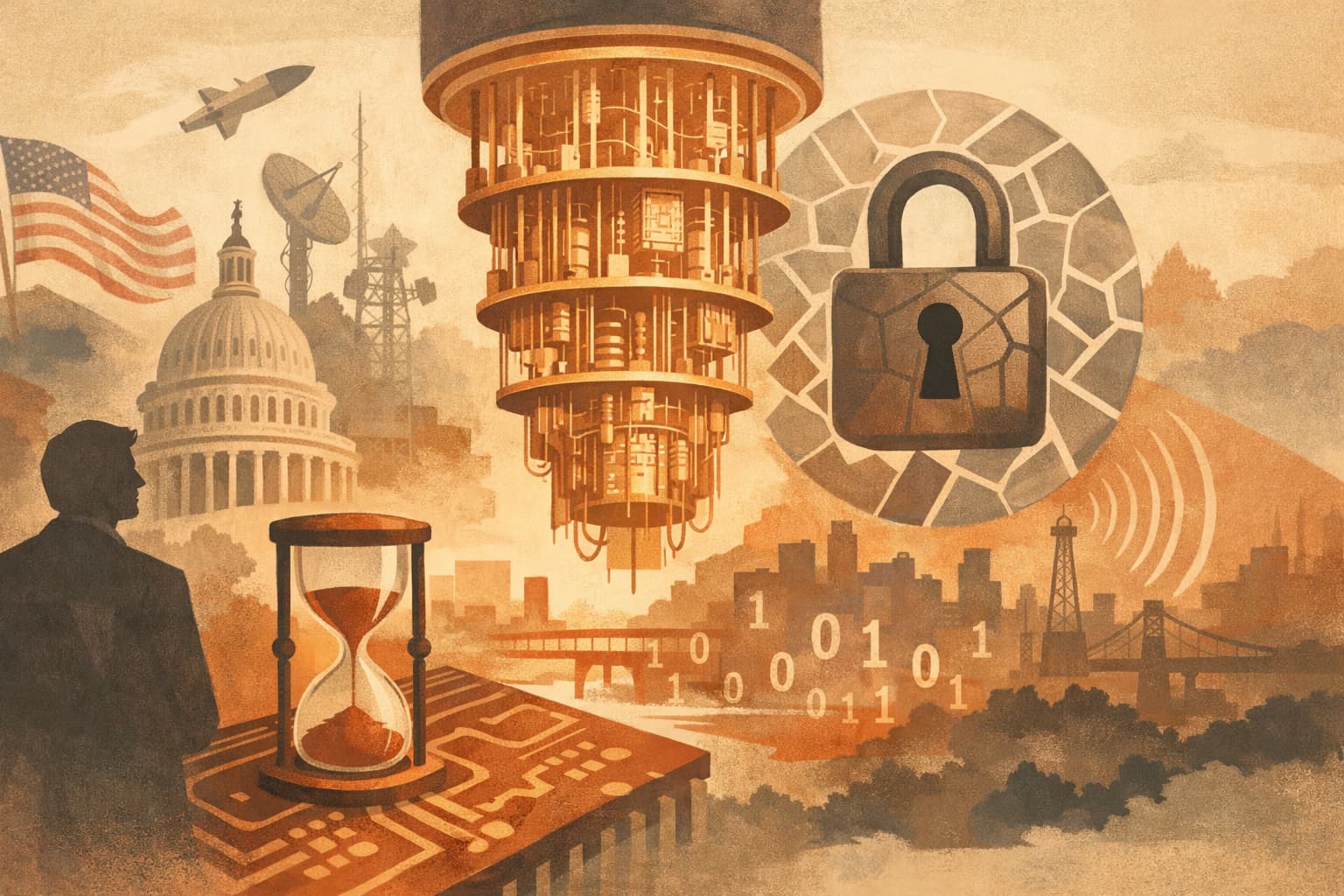
U.S. Sets Deadlines for Quantum Computer and Post-Quantum Security

The Trump administration has set a new timetable for quantum technology, aiming for an operational quantum computer by 2028 and quantum-resistant encryption by 2031, four years earlier than previously planned. The goals were set in two recent presidential orders signed by President Donald Trump to speed up both development of the technology and defenses against the security risks it could create.
One order directs federal agencies to work with private companies and universities to build a quantum computer by 2028 that can support scientific research. The U.S. Department of Energy will define the technical standards, with the emphasis on proving practical value. The administration says quantum computers should eventually outperform today’s supercomputers on certain classes of problems, although that has not yet been achieved reliably outside controlled environments.
A separate order tells federal agencies to accelerate adoption of post-quantum encryption and sets 2031 as the deadline. It gives special attention to critical infrastructure, including power grids and water systems, which are considered especially vulnerable to disruption. The concern is that sufficiently advanced quantum computers could eventually break many of today’s common encryption methods, prompting governments and companies to move now to post-quantum cryptography.
The orders also address quantum sensing, directing the Commerce and Defense departments to deploy quantum sensors within five years. These sensors could deliver extremely precise measurements and may even serve as an alternative to GPS in places where satellite signals are weak, unavailable, or deliberately jammed. The technology could have major military and space uses. Investment in the field has surged, with billions of federal dollars flowing through the Commerce Department and major companies and startups expanding their efforts, even as major technical hurdles remain, especially error correction and large-scale system stability. The U.S. is also closely watching China, which is said to be investing more than $15 billion in quantum research.
The same event, reported separately by each outlet. Open a few to compare what different newsrooms emphasize — and what they leave out.
Not the same event — other stories that share this one’s people, places, or theme: background, reactions, and follow-ups.

