Israeli Spending Hits Record High in September Fueled by Holiday Shopping
Translated & summarized from Bizportal by baba
The story in 6 lines · by baba
- Israeli credit card spending hit a record 53.252 billion shekels in September.
- Holiday shopping and online purchases fueled the spending surge.
- Daily average spending reached a new high of 1.775 billion shekels.
- Online spending set a record with a daily average of 1.032 billion shekels.
- Physical store transactions saw a slight monthly decrease but annual increase.
- Cash withdrawals from ATMs continued to decline.
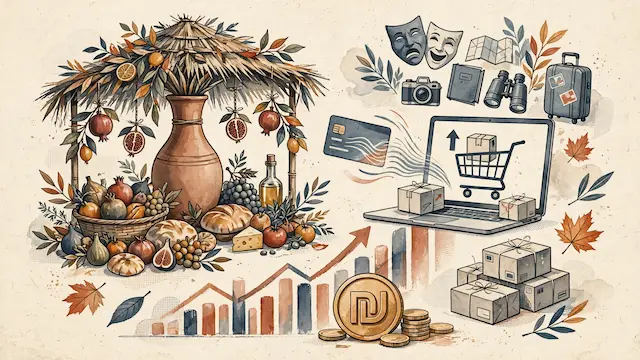
Israeli consumers spent a record 53.252 billion shekels using credit cards in September, driven by the Rosh Hashanah and Sukkot holidays. Data from Shva, which manages national payment systems, revealed a 6.2% increase in total spending compared to September of the previous year. The daily average spending reached a new high of 1.775 billion shekels, a 1.7% rise from August and marking the fourth consecutive month the average exceeded 1.7 billion shekels.
Online purchases were a significant contributor to the surge, totaling 30.961 billion shekels in September, a 5.5% year-over-year increase. The daily average for online spending hit a record 1.032 billion shekels, surpassing the previous July record. In contrast, physical in-store transactions saw a slight decrease of 2% in daily average spending compared to August, though they still showed a 7.2% annual increase.
Concurrently, cash withdrawals from ATMs continued to decline. September saw 5.612 billion shekels withdrawn, an 1.8% decrease from the same period last year. The daily average for cash withdrawals also fell by approximately 2% compared to August.
The overall trend indicates that household spending continued to rise during the holiday season, with online activity being the primary driver, while physical purchases experienced a slight dip from August and cash usage decreased year-over-year.
The same event, reported separately by each outlet. Open a few to compare what different newsrooms emphasize — and what they leave out.
Centre 2Right 3Other 3







Not the same event — other stories that share this one’s people, places, or theme: background, reactions, and follow-ups.