
Iran Claims Strait Control Amid Economic Woes and Rising Tensions
Translated & summarized from Cursorinfo by baba
The story in 5 lines · by baba
- Iran asserts control over Strait of Hormuz, setting seven conditions for reopening.
- Iranian rial hits record low amid U.S. sanctions on oil exports.
- Military officials issue strong warnings against potential Israeli aggression.
- Minister of Oil resigns amidst reports of insufficient export revenue.
- Shipping attacks continue daily in the Strait of Hormuz and Gulf of Aden.
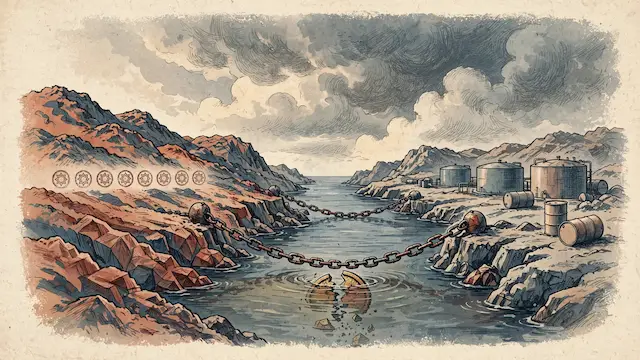
Iran's military has asserted full control over the Strait of Hormuz, announcing seven conditions for the resumption of shipping through the vital waterway. Brigadier General Aziz Jafari, commander of Iran's Air Defense Base Khatam al-Anbiya, stated that all movements in the area are under the control of the Islamic Republic's armed forces. Concurrently, the Iranian rial has plummeted to a record low against the dollar, and the Minister of Oil has resigned.
General-major Ali Abdollahi, Chief of General Staff of the Iranian Armed Forces, issued a warning, particularly referencing Israeli Prime Minister Benjamin Netanyahu's visit to the UAE. Abdollahi stated that any "miscalculation" by Israel leading to a new war would result in the destruction of its hopes and dreams, warning that the "flames of war will engulf everyone" if a new conflict against Iran begins.
Iranian Foreign Minister Abbas Araghchi informed foreign ambassadors that a military solution to the conflict is impossible, emphasizing that Iran's response to renewed military confrontation would be "harsher than before." He added that only negotiations based on justice and honesty can resolve the conflict, and that the strait could be fully reopened within seven days if Tehran's conditions and "hostile measures" are rescinded.
Parliament Speaker Mohammad Bagher Ghalibaf indicated that Tehran has received proposals from Washington through intermediaries but will not accept unilateral demands. He reiterated that the Strait of Hormuz will remain closed until Iran's seven conditions, based on the "Islamabad Memorandum," are met.
Economically, U.S. Treasury Secretary Scott Bessent noted that Iran shipped no crude oil in September, attributing this to the Trump administration's efforts to cut off a key revenue source. Iranian President Masoud Pezeshkian had previously acknowledged difficulties in oil sales due to the blockade. The Minister of Oil, Mohsen Paknejad, resigned citing "family and personal circumstances," though reports suggest it's linked to export levels insufficient for state needs. A new acting minister has pledged to maximize production and maintain exports through new strategies.
The Iranian currency has seen a dramatic devaluation, with the dollar reaching a record 270,000 tumans on the unofficial market, more than doubling since the start of the year. The euro has surpassed 300,000 tumans. The UK Maritime Trade Operations reported at least one attack per day in the Strait of Hormuz or Gulf of Aden since October 2nd.
Mentioned
Not the same event — other stories that share this one’s people, places, or theme: background, reactions, and follow-ups.
