
Boeing 737 MAX Survives Extreme Dive Amid Flydubai Incident
Translated & summarized from Mako by baba
The story in 5 lines · by baba
- A Boeing 737 MAX 8 survived an extreme dive and high-speed descent.
- The aircraft reached speeds near the speed of sound and experienced extreme G-forces.
- Damage included a broken rear wing section and a torn rudder.
- The plane landed safely in Saudi Arabia with minor damage.
- Its resilience has been praised by experts and officials.
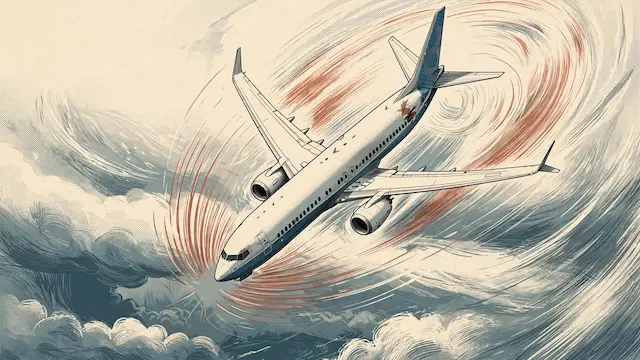
A nearly four-year-old Boeing 737 MAX 8 aircraft, operating as Flydubai flight FZ 1073, demonstrated remarkable resilience during an incident last week that saw it dive steeply and at high speed, a feat many are calling a miracle. While the focus has been on the heroes who thwarted a potential attack, questions have arisen about how the aircraft itself withstood the extreme flight conditions. The plane, which had previously faced criticism, was praised for its durability after landing safely with only minor damage.
During the incident, the aircraft plummeted nearly 5,000 meters in about 30 seconds from an altitude of approximately 10,300 meters, reaching a peak speed of over 1,100 km/h, close to the speed of sound. This involved a 39-degree downward angle, three times a standard descent. Experts suggest the autopilot likely disengaged, causing the rapid acceleration.
Following the stabilization of the aircraft after the threat was neutralized, the crew managed to reduce the speed to around 720 km/h in 43 seconds. The plane experienced negative 3 G-force as the crew pulled up, exceeding its design limit of 2.5 G. This type of force is typically encountered by fighter pilots and astronauts. The extreme maneuvers resulted in damage, including a broken section of the rear wing and a torn rudder.
Aircraft undergo rigorous testing, including dives up to 1,000 km/h and scenarios involving control surface malfunctions. However, the flight's speed exceeded tested limits, and the rudder was torn off rather than merely stuck, presenting a far more challenging situation for the pilots.
The aircraft is currently at Tabuk Airport in Saudi Arabia, where it landed, and will undergo inspections to determine the extent of any irreversible damage. Its survival of such an ordeal has been lauded, with U.S. President Donald Trump commending its structural integrity on social media. A former pilot for the U.S. Federal Aviation Administration, Bob Stoney, commented on the challenging nature of the incident.
The same event, reported separately by each outlet. Open a few to compare what different newsrooms emphasize — and what they leave out.
Centre 2


Not the same event — other stories that share this one’s people, places, or theme: background, reactions, and follow-ups.


