New Compensation Track Launched for Extortion Victims
Translated & summarized from Walla by baba
The story in 5 lines · by baba
- New compensation track for victims of extortion launched.
- Maximum compensation is NIS 2 million for direct damages.
- Program covers damages to businesses and residences.
- Requires a police report and insurance denial.
- Claims must be filed within seven days of damage.
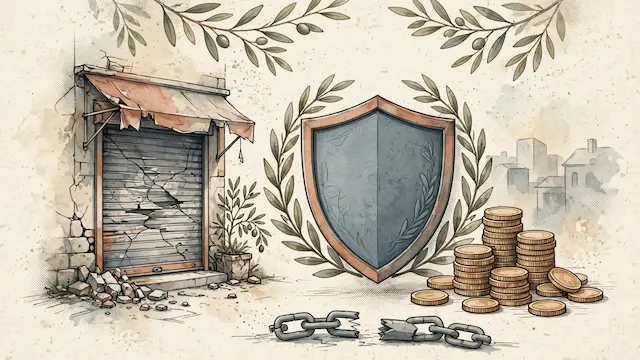
Israel's Tax Authority has launched a new pilot program offering compensation for direct damages to businesses and homes resulting from extortion, commonly known as 'protection' rackets. The initiative, operating under Government Decision 4299, covers damages incurred between October 4, 2026, and December 4, 2026. Eligible business owners must operate legally, hold a valid business license, and be registered with the Tax Authority. Compensation is available if their property, such as business premises, inventory, or equipment, or their residence, is directly damaged due to refusal to pay extortion money or after filing a police complaint.
To qualify, claimants must have filed a police report recognized as related to extortion. They also need to demonstrate that they could not obtain insurance coverage for malicious damage, even if previously insured for it, or that their claim was denied by an insurance company. Additional conditions include adhering to security and risk reduction measures required by insurers. For structural damage, proof of legal construction is necessary.
Claims must be submitted to the Tax Authority's compensation fund within seven days of the damage occurring, using a dedicated online system. Crucially, claimants must not repair the damage before a property tax appraiser has inspected it, as repairs could jeopardize the claim. Temporary measures like replacing broken glass are permitted. The maximum compensation is NIS 2 million, covering only direct damages, not indirect losses or third-party harm. The processing time for claims is up to eight months.
Mentioned
The same event, reported separately by each outlet. Open a few to compare what different newsrooms emphasize — and what they leave out.