
Jabotinsky's Vision of Coexistence Contrasted with Current Israeli Politics
Translated & summarized from Maariv by baba
The story in 6 lines · by baba
- Jabotinsky advocated for Arab equal rights and coexistence, not displacement.
- Author criticizes current Israeli politics for ignoring Jabotinsky's principles.
- Netanyahu's UN speech lacked a plan for ending the war.
- Right-wing belief in Arab emigration contradicts Jabotinsky's views.
- Upcoming elections' rhetoric is seen as discouraging for peace.
- Hope remains for future coexistence and leadership for peace.
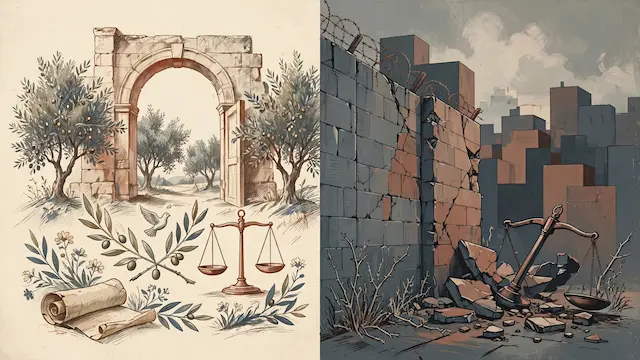
Author Daniel Friedman revisits Ze'ev Jabotinsky's 1923 essay "The Iron Wall" to critique contemporary Israeli approaches to the Israeli-Palestinian conflict. Jabotinsky, a prominent Zionist intellectual, argued that Zionism could not succeed solely through "more building" or "force." Instead, he advocated for full equal rights for Arabs in the land, stating that Arabs would always be present and that their displacement was impossible. He believed that a "Iron Wall" of military strength was necessary to deter Arab disruption of Jewish settlement, but ultimately aimed for an agreement with Arabs once they realized there was no hope of expelling the Jews.
Friedman contrasts Jabotinsky's views with recent events, including the 2023 judicial reform and the Hamas attack on October 7th. He notes that Jabotinsky rejected the idea of Arab emigration and insisted on equal rights, a stance he finds absent in current political discourse. Prime Minister Benjamin Netanyahu's recent UN speech, while promising victory, offered no clear plan for ending the war or addressing Israel's damaged international standing, according to Friedman.
The author criticizes the prevailing right-wing belief that Palestinians can be made to leave "voluntarily" or disappear, directly contradicting Jabotinsky's century-old assertion that two peoples would always inhabit the land. Friedman also points to Jabotinsky's willingness to swear to never violate equal rights or attempt to suppress Arabs, a principle he feels is being ignored.
Looking ahead to upcoming elections, Friedman expresses concern over the dismissive rejection of peace overtures from Mansour Abbas and the general political rhetoric. He hopes that after the elections, a quieter atmosphere will allow for reflection on how both peoples can coexist peacefully, and that leadership on both sides will emerge to pursue this path, despite the recent trauma.
Read the original at Maariv