
Galilee Residents Angered by Travel Restrictions During Protests
Translated & summarized from 0404 by baba
The story in 5 lines · by baba
- Galilee residents were advised to limit travel during Simchat Torah due to planned protests.
- Residents expressed anger, feeling their holiday was disrupted by the directive.
- Finance Minister Bezalel Smotrich criticized the situation as a loss of governance.
- The incident highlights tensions and debates over governance in the Galilee.
- The controversy raises questions about balancing protest rights with public safety.
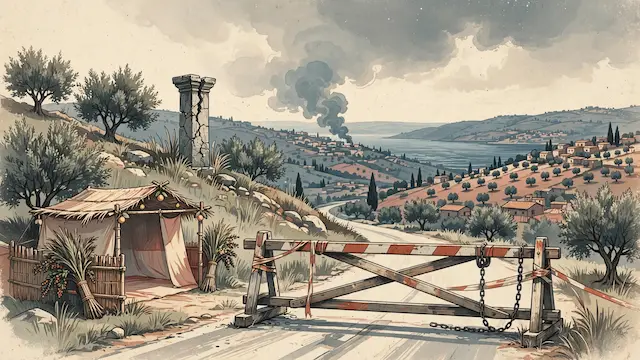
Residents of the Misgav Regional Council in the Galilee expressed outrage following a directive advising them to limit travel and stay home during the afternoon and evening hours. This recommendation was issued in anticipation of planned protests in the nearby Arab towns of Sakhnin, Arraba, and Deir Hanna. The timing of the advisory, coinciding with Simchat Torah celebrations, particularly the Hakafot (revolutions) where the Torah scrolls are danced, intensified the anger. Residents felt their holiday routines were being disrupted due to demonstrations in the vicinity, arguing that they were being asked to curtail their lives while others exercised their right to protest.
Maayan Tal-Mor, a local resident, sharply criticized the situation in a video, stating that the directive implied residents of Misgav should remain indoors during a holiday because of protests in neighboring Arab communities. She viewed this as an example of a persistent imbalance in the Galilee, where residents feel compelled to limit their freedom of movement and normal holiday activities due to the fear of disturbances. This incident follows recent controversies in the Galilee, including the tearing down of Israeli flags and political activities by the Religious Zionism movement, which have fueled discussions about governance and tensions between communities.
Minister of Finance Bezalel Smotrich joined the criticism, calling the situation "unbearable" and asserting that it reflects a fundamental problem of lost governance in the Galilee. He argued that a reality where residents must confine themselves during a holiday due to potential disturbances is unacceptable and necessitates a complete overhaul of policy. Smotrich linked the incident to his party's agenda of expanding Jewish settlement and presence in the Negev and Galilee, aiming to replicate models used in Judea and Samaria to strengthen land control and governance.
Smotrich stated that the recent events underscore the need for a broad policy shift in the North, emphasizing increased settlement presence and enhanced enforcement as key components of future government plans for the region. He has previously proposed plans for new settlements, expanding existing ones, and establishing agricultural farms in the Negev and Galilee, aligning the current controversy with his political platform.
The incident raises fundamental questions about balancing the right to protest with ensuring the daily lives and safety of other residents. The Galilee's interconnected road network means local events can quickly impact thousands. Authorities and security forces face the challenge of allowing protests while maintaining public order and ensuring safe passage for all. For many residents, the travel advisory became a symbol of a perceived failure to maintain this balance, transforming a cautionary notice into a broader debate on personal security, freedom of movement, identity, and official conduct during protests.
Read the original at 0404Mentioned
The same event, reported separately by each outlet. Open a few to compare what different newsrooms emphasize — and what they leave out.



Not the same event — other stories that share this one’s people, places, or theme: background, reactions, and follow-ups.
