Hero Pilot Recounts Co-Pilot's Attack and Passenger Intervention
Translated & summarized from Ynet by baba
The story in 5 lines · by baba
- Pilot describes co-pilot praying before attacking him.
- Israeli passengers and pilot prevented co-pilot's attack.
- Co-pilot's actions led to a sharp dive of the aircraft.
- Pilot fought to open cockpit door for passengers.
- Pilot spoke with Prime Minister Netanyahu about the incident.
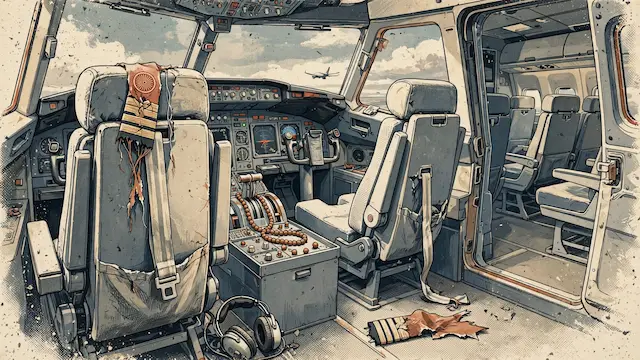
An Indian pilot, Smith Machchar, has described the moments leading up to an attempted hijacking of a plane, speaking for the first time about the incident. In a conversation with Prime Minister Binyamin Netanyahu, Machchar recounted that the Omani co-pilot, Hamam Al-Hamami, prayed shortly before attacking him. Machchar stated that the co-pilot's actions were only thwarted by the quick thinking of himself and the Israeli passengers. The pilot described the flight as normal until the co-pilot requested to pray, which he noted was not unusual for locals. While the co-pilot was praying, Machchar looked forward. After about four to five minutes, he was struck forcefully on the back of the head. Initially fearing catastrophic damage to the aircraft, he soon realized the attack was coming from his co-pilot. Machchar attempted to stop the co-pilot but his vision was severely impaired by the initial blows, and he felt the plane begin to dive sharply. He recalled trying to open the cockpit door, but believed the co-pilot prevented it. Lying on the cockpit floor amidst screams, Machchar felt a final surge of energy and fought his way to the door, managing to open it. Passengers then rushed in and took control of the aircraft. When Netanyahu asked how he opened the door, Machchar explained that it has an internal spin mechanism. While an external code was being attempted by colleagues, the co-pilot prevented its use. The only way to open the door was by reaching the handle and turning it, which Machchar managed to do.
Read the original at YnetThe same event, reported separately by each outlet. Open a few to compare what different newsrooms emphasize — and what they leave out.



Not the same event — other stories that share this one’s people, places, or theme: background, reactions, and follow-ups.