
Former IDF Pilot and Startup Founder Dies in Light Aircraft Crash
Translated & summarized from Ynet by baba
The story in 5 lines · by baba
- Former fighter pilot Eran Peleg died in a light aircraft crash.
- A second person piloting the plane was injured and hospitalized.
- The crash occurred after takeoff from Megiddo airstrip.
- The accident is currently under investigation by authorities.
- A fire from the crash was contained by firefighters.
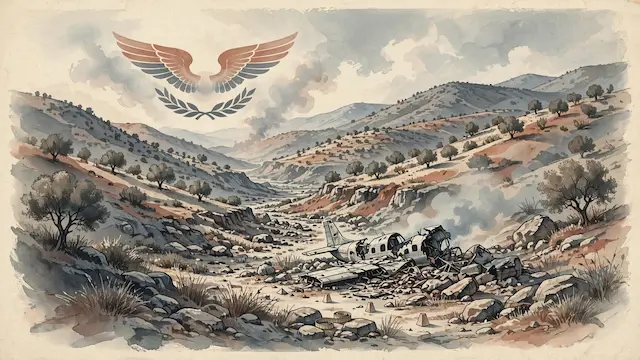
Eran Peleg, a 75-year-old former fighter pilot and startup entrepreneur, died Friday when a light aircraft he was in crashed near Kfar Qara in the Wadi Ara region. A 33-year-old man, who was piloting the aircraft, was injured in the crash. The two had taken off from Megiddo airstrip when a malfunction reportedly led to the crash. The circumstances of the accident are under investigation by police and the Aviation Accident Investigation and Prevention Bureau.
The aircraft crashed in an open area and caught fire, with the blaze spreading to a nearby grove and towards homes in Kfar Qara. Firefighters managed to bring the fire under control. The plane was completely destroyed.
The injured pilot, who suffered burns to his limbs, was rescued and evacuated to Rambam Hospital in Haifa. His condition was initially reported as serious but later downgraded to moderate after examinations.
Peleg, a former fighter pilot in the Israeli Air Force with the rank of Lieutenant Colonel (reserves), later transitioned to the technology sector. He had served as a flight instructor at the Sky Flight flying school. In 2020, he spoke about a venture he co-founded with Iyad Badr, an Arkia pilot, aimed at bringing the high-tech industry to the Druze village of Hurfeish. The two had met about 12 years prior at the Megido Aviation school, where Peleg was the chief instructor and Badr had obtained his civilian pilot license.
In 2020, they established "Metafor," a company specializing in model-driven development. Their product allowed for the simulation of planned processes from flowcharts. Clients at the time included Israel Aerospace Industries, the Air Force, and Mobileye. The company employed seven people, mostly software and computer engineers, and was based in Hurfeish. Peleg served as CEO, overseeing development and marketing, while Badr managed business development and fundraising. Their goal was not only to build a tech company but also to create high-tech employment opportunities for residents of Hurfeish and the surrounding area.
Peleg had expressed his belief that establishing a tech company in a village was a significant revolution for the Druze community. He noted the presence of engineers and doctors within his and Badr's families, emphasizing the potential for the venture to dramatically change the reality in the region if successful. He also highlighted the strong professional and personal bond with Badr, which had initially flourished at the flight school. Peleg had previously lived in Kfar Vradim and commuted to Tel Aviv for work, underscoring the importance of creating local employment opportunities. He mentioned that one employee had already received a higher-paying job offer but chose to stay, valuing the principle of working locally. Peleg stated that even if the company achieved an exit, it should continue to operate in Hurfeish to provide employment and allow people to fulfill their potential in the periphery, expressing his immense satisfaction and energy to invest in the venture's success.
Read the original at YnetMentioned
The same event, reported separately by each outlet. Open a few to compare what different newsrooms emphasize — and what they leave out.









Not the same event — other stories that share this one’s people, places, or theme: background, reactions, and follow-ups.

