
Inflation's Impact on Retirement Savings: Protecting Your Pension in Israel
Translated & summarized from Bizportal by baba
The story in 6 lines · by baba
- Inflation erodes retirement savings, reducing future purchasing power.
- 15,000 shekels at age 67 may require 23,400 shekels by age 85.
- Long-term inflation planning is crucial for retirees.
- Some expenses may rise faster than the general inflation rate.
- Balanced investment strategies are recommended for retirees.
- Retirees should project expenses under various inflation scenarios.
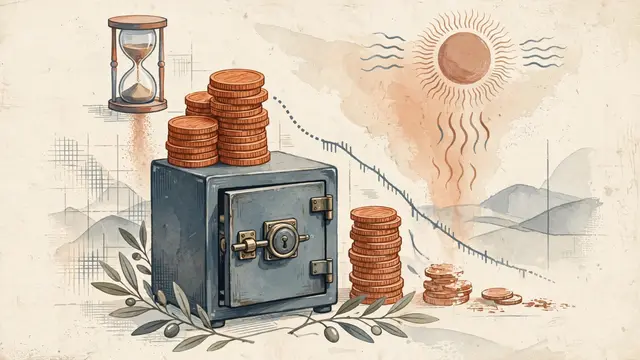
Retiring at 67 with a monthly income of 15,000 shekels might seem comfortable, with a paid-off home and grown children. However, inflation significantly erodes purchasing power over time. Assuming an average annual inflation rate of 2.5%, that 15,000 shekels would only be worth approximately 9,600 shekels by age 85. To maintain the same purchasing power for 15,000 shekels at age 85, one would need about 23,400 shekels monthly, based on a moderate inflation scenario.
Even a seemingly low annual inflation rate of 2% would require around 21,400 shekels monthly by age 85 to match today's 15,000 shekel purchasing power. At a 3% inflation rate, this figure rises to approximately 25,500 shekels. These calculations consider a retirement period of about 18 years until age 85, during which even modest annual inflation can substantially alter living standards.
Certain expenses, such as home assistance, personal care, and some medical costs, may rise faster than the average inflation index. While some retirement expenses like commuting and child-related costs decrease, the overall financial picture requires careful planning. Pension funds and National Insurance benefits are adjusted, but not always in line with the full cost of living.
Beyond regular pension payouts, savings outside the pension fund are crucial. Holding large sums in cash or low-yield deposits for security can lead to a gradual loss of purchasing power over an 18-year retirement. A balanced investment strategy, including assets with growth potential like stocks, alongside bonds for stability and liquid assets for immediate needs, is recommended. The optimal allocation depends on individual circumstances, including pension size, expenses, and risk tolerance.
For instance, a couple retiring with 18,000 shekels in monthly expenses and 13,000 shekels in pension and benefits faces an initial deficit. If expenses grow at 2.5% annually while income grows slower, this gap can widen considerably. By age 85, those 18,000 shekels in expenses would require approximately 28,000 shekels monthly to maintain the same consumption level. Planning should involve projecting expenses until age 85 under various inflation scenarios (2%, 2.5%, 3%) and comparing them to expected income and liquid savings.
Read the original at Bizportal