
Tucker Carlson Questions WWII Rationale, Criticizes Israel in Interview
Translated & summarized from Cursorinfo by baba
The story in 5 lines · by baba
- Tucker Carlson questioned the UK's entry into WWII and Hitler's invasion of Poland.
- Carlson criticized Israel's actions in Gaza, comparing collective punishment to the Gulag.
- The interview also covered economic comparisons between Russia and the UK.
- Free speech in the UK and the conflict in Ukraine were also discussed.
- Jacob Rees-Mogg largely disagreed with Carlson's viewpoints.
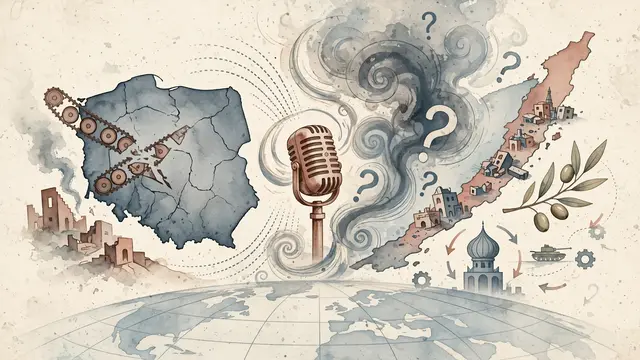
American journalist Tucker Carlson sparked controversy during a recent interview with British politician Jacob Rees-Mogg, published on October 2nd. The discussion, initially intended to focus on UK defense readiness against Russia, broadened to include Ukraine, NATO, nuclear weapons, World War II, free speech, and the situation in Gaza.
Carlson questioned the necessity of the UK's hardline stance against Russia, citing Russia's larger economy. Rees-Mogg countered, presenting data showing the UK's larger GDP and calling the Russian economy inefficient due to corruption. Carlson argued that economic power is not solely defined by GDP, pointing to Russia's vast resources.
The conversation turned to World War II, where Carlson questioned Britain's entry into the conflict and its benefit to the British Empire. He then discussed Adolf Hitler's 1939 invasion of Poland, stating that the idea Hitler "just happened to be in Poland" was false, suggesting historical territorial transfers to Germany, including Prussia, were factors. Rees-Mogg expressed surprise at Carlson's remarks, interpreting them as a defense of Hitler, to which Carlson responded ironically, "I guess I'm just a secret Nazi."
Carlson also criticized Israel's actions in Gaza, drawing a parallel between collective punishment and the Soviet Gulag. He stated that collective guilt and punishment contradict Western civilization and that killing innocent people is always wrong, applying this principle to the situation in Gaza.
Regarding free speech in the UK, Carlson claimed the government prosecutes pro-Palestinian supporters, suggesting saying "Free Palestine" could lead to arrest. Rees-Mogg disagreed, clarifying that British restrictions target extremist organizations, support for terrorism, and violent threats, not the expression of political views.
Read the original at CursorinfoMentioned

