
UN Warns of Social Unrest From "Triple Crisis" With No Clear Solution
Translated & summarized from Calcalist by baba
The story in 6 lines · by baba
- UN warns of social unrest due to high energy prices and a "triple crisis".
- Global fuel subsidies may exceed $1 trillion this year.
- 130 million more people could fall into poverty without aid measures.
- The crisis could peak in early 2027 with a strong El Niño event.
- Protests linked to energy prices occurred in at least 10 countries.
- UNDP offices predict the crisis will persist or worsen.
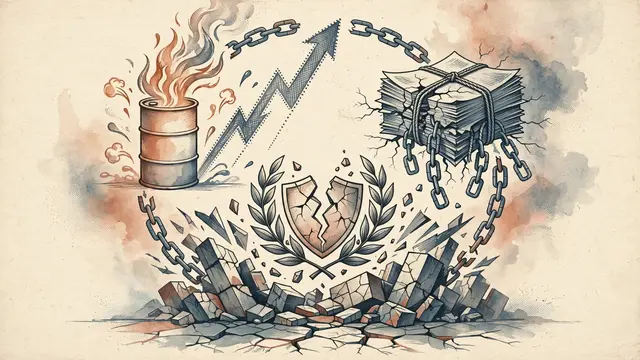
Governments worldwide are struggling to shield consumers from high energy prices, partly due to the war in Iran, with global fuel subsidies potentially exceeding $1 trillion this year, according to a report by the UN Development Programme (UNDP). The UNDP warns that the next two months are critical for governments implementing price caps, subsidies, and tax rebates as oil prices approach $100 per barrel and high debt costs strain budgets. The report, which analyzed data from the World Bank, IMF, and IEA, found that the number of countries providing various forms of aid nearly doubled between April and September.
According to the UNDP, without these aid measures, an additional 130 million people could fall below the poverty line (defined as $6.85 per day) this year. The chief economist of the UNDP, George Gray Molina, stated that the outlook for the coming weeks and months is uncertain, as there is no clear path out of the "triple crisis," which he identified as the war in Iran, rising interest rates, and the El Niño phenomenon.
The crisis could peak in early 2027 with the strongest El Niño event on record, potentially causing floods and droughts that exacerbate food insecurity due to ocean warming. In September, higher energy prices contributed to protests and social unrest in at least 10 countries, including Syria, Guatemala, the Philippines, France, and Portugal.
A separate survey of 26 UNDP field offices in September indicated that 25 expect the crisis in the Middle East to persist or gain higher priority in the next six months, with all anticipating that "the worst is yet to come."
Read the original at Calcalist