
Experts Warn of Growing Sanctions Threat to Israeli Economy
Translated & summarized from Maariv by baba
The story in 5 lines · by baba
- Sanctions against Israeli settlements may expand to harm the entire Israeli economy.
- Experts warn of a growing risk of broad Western sanctions on Israel.
- The measures could lead to 'over-compliance' and avoidance by foreign companies.
- A coordinated national response is needed to prevent escalating sanctions.
- The threat is compared to sanctions imposed on Iran and Russia.
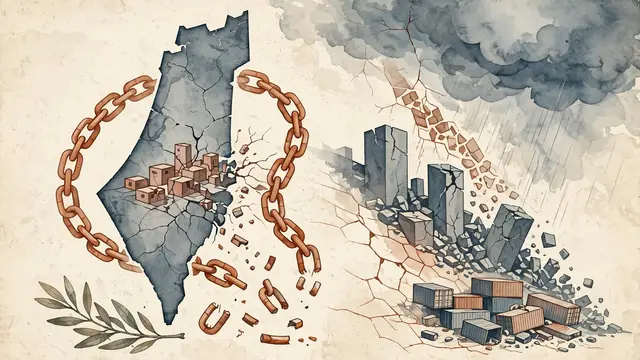
Geoeconomic researcher Eyal Heksher is warning that international measures against Israeli settlements could escalate into broader sanctions impacting the entire Israeli economy, drawing parallels to sanctions imposed on Iran and Russia. He argues that the current actions, particularly if advanced in the U.S., are laying the groundwork for future, more extensive measures. Heksher dismisses the notion that these sanctions are minor due to the limited export volume from settlements, explaining that foreign companies may avoid trade with Israel altogether to prevent complications, a phenomenon known as "over-compliance." This could harm major Israeli companies operating in or serving settlements, such as banks with branches in these areas.
Eli Groner, former director-general of the Prime Minister's Office, echoes these concerns, emphasizing that international banks, insurers, investors, and companies might perceive any activity related to Israel as a regulatory risk, leading them to reduce exposure. Groner cautions that the damage could far exceed the scope of the original sanctions. He predicts that the initial actions against settlements will not be the last, stating, "The next step will be Israel's economy itself." Heksher describes these moves as anti-Semitic, hypocritical, and populist, but stresses that the motivation does not negate the potential harm.
Heksher highlights a developing mechanism where different countries are adopting similar measures, citing the Dutch ban on settlement goods, stricter British guidelines for businesses, and a proposed U.S. bill. He notes that while Donald Trump's presidency offered a sense of security, a future Democratic administration in the U.S., potentially influenced by anti-Israel factions, could significantly increase the threat. Heksher warns that this could become Israel's primary challenge in the coming years, posing a fundamental problem for its economy.
He challenges three assumptions: that Israel can handle boycotts as it has in the past, that restrictions can be circumvented by moving to other markets, and that Israel's economic and security strength will provide immunity. Heksher draws a parallel to Iran's experience with sanctions, which led to severe economic damage and developmental setbacks. He asserts that Israel lacks the same security buffer as Iran and urges treating this risk as an "existential threat" requiring a national, coordinated response, similar to efforts against Iran's nuclear program.
Groner advocates for a national project to prevent sanctions, led by a senior official reporting directly to the Prime Minister. This individual would coordinate efforts across ministries and the business sector to monitor legislative proposals and regulations in key capitals, identify opportunities to block measures, and understand how precedents in one country can influence others. Groner concludes that while the first sanction is an event, the infrastructure enabling a tenth sanction represents a strategic risk that must be addressed immediately.
Read the original at MaarivMentioned

