
Israel Approves New Temporary Transport Hub Near Tel Aviv to Relieve Central Bus Station
Translated & summarized from Channel 9 by baba
The story in 5 lines · by baba
- A new temporary transport hub will be built at Mikve Israel near Holon.
- The hub will handle 60% of Tel Aviv's Central Bus Station operations.
- The project aims to decongest and eventually decommission the old Central Bus Station.
- The new facility is expected to open between 2031 and 2032.
- The site will also include infrastructure for flood control in the Gush Dan region.
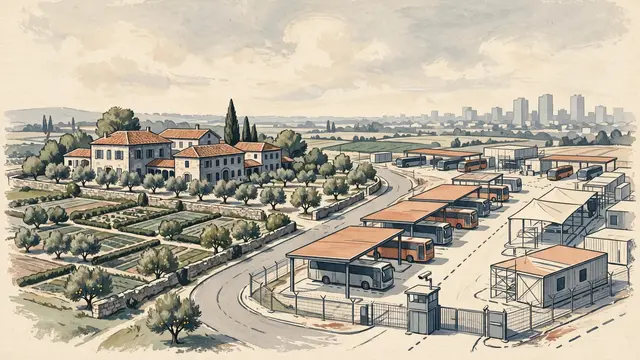
Israel is moving forward with plans to construct a new temporary transportation hub at the Mikve Israel agricultural school site near the Holon interchange. This facility is intended to absorb approximately 60% of the bus operations currently handled by Tel Aviv's aging Central Bus Station (CBS) on Levinsky Street, marking a significant step in decongesting the existing terminal. A joint Knesset committee approved a limited rezoning of Mikve Israel land for the terminal on September 7, 2026. The new hub is slated to begin operations between 2031 and 2032 and will function until a permanent transport complex is established in the Ben-Tsvi area of Holon, which is envisioned to eventually replace the current CBS as a major southern hub for the Tel Aviv metropolitan area.
The current CBS, operational since 1993, is a massive seven-level complex that the Tel Aviv municipality has sought to reduce activity at due to traffic, environmental, and urban planning concerns. The city aims to redevelop the CBS site for housing, retail, green spaces, and cultural facilities. However, closing the CBS requires a viable alternative for its extensive bus operations, including parking and maintenance. The Mikve Israel site is being developed to fulfill this role, designed as a modern transport node with passenger terminals, operational areas, overnight parking, driver facilities, and charging infrastructure for electric buses.
The project will occupy about 41 dunams within a larger 134-dunam area designated for the project at Mikve Israel, north of Highway 44. This is a refinement from earlier planning stages that considered a larger area. The new hub is designed to accommodate electric buses and incorporates environmental protection measures. While it will be a functional transport hub, it is not expected to replicate the scale of the current seven-level CBS building.
The relocation of 60% of the CBS's operations means the old station will not close immediately. The remaining 40% of activity will need to be managed elsewhere, and further solutions are required before the Levinsky Street station can be fully decommissioned. The Mikve Israel hub is considered an intermediate step, providing necessary operational space while permanent infrastructure is developed. The temporary terminal is expected to operate for up to 25 years, after which the land is intended to revert to its original agricultural use, though school officials have expressed doubts about the feasibility of restoring agricultural activity.
Significantly, the project also includes the construction of an underground drainage channel to mitigate flooding in the Gush Dan region and facilitate the potential addition of a fourth railway track along the Ayalon corridor. This multi-purpose use of the land integrates bus terminal development, flood control, and railway infrastructure expansion. The relocation of the hub to the Holon interchange is expected to alter bus routing, potentially reducing transit buses in southern Tel Aviv and improving the separation between urban and metropolitan routes, though it may also change passenger transfer points and travel to central Tel Aviv.
Read the original at Channel 9
