Netanyahu's Election Gambit: Security Warnings Amidst Political Maneuvering
Translated & summarized from Maariv by baba
The story in 5 lines · by baba
- Netanyahu warns of Iranian threats, potentially to influence upcoming elections.
- Security officials confirm concern but no concrete intelligence of an imminent attack.
- The PM's strategy aims to shift focus from October 7th accountability.
- Netanyahu seeks to re-establish his image as a strong security leader.
- Potential escalation could overshadow the opposition's election campaign.
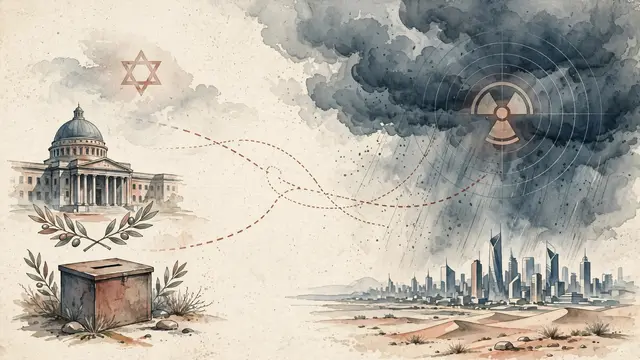
Prime Minister Benjamin Netanyahu has publicly warned of potential attacks from Iran or its proxies, a move critics suggest is politically motivated ahead of upcoming elections. While security officials confirm no concrete intelligence of an imminent attack, they acknowledge a genuine security concern regarding Iran's nuclear program and regional activities. Netanyahu's recent trip to Abu Dhabi, where he discussed the Iranian threat with UAE President Mohammed bin Zayed, yielded no public denial from the UAE regarding the threat, despite Netanyahu's alleged request for one. The visit itself was reportedly low-profile, lacking joint press conferences or statements.
Netanyahu's public pronouncements, including a recent speech at Tel Nof Air Force base where he spoke of "signs" of enemy intentions, have been interpreted by some as an attempt to preemptively frame the narrative should an incident occur before the elections. This strategy aims to shift the focus from the ongoing political debate over responsibility for the October 7th attacks to his current role as a wartime leader. The opposition has made accountability for October 7th a central theme of their campaign, and a potential escalation with Iran could overshadow these discussions.
Should a conflict erupt before the elections, Netanyahu would be at the center of events, judged on his real-time decisions rather than past failures. This contrasts with the current political landscape, where he is forced to defend his actions leading up to the October 7th massacre. By highlighting the Iranian threat, Netanyahu seeks to re-establish his image as "Mr. Security," a persona significantly damaged by the events of October 7th. The focus on Iran, rather than Gaza, is seen as politically more advantageous for him, as it places him at the heart of decision-making regarding regional diplomacy and potential military action.
However, the ultimate course of action may depend on decisions made by the United States, particularly concerning its approach to Iran post-midterm elections. There is speculation that former President Trump might opt for military action if diplomatic channels with Iran remain unproductive. The UAE's proximity to Iran and its role as a regional player with ties to both Israel and the US make its insights valuable to Netanyahu in assessing Iranian intentions and the potential regional fallout of any escalation. While the current alert level in the IDF has not been raised, any concrete operational threat would likely manifest in increased readiness and public directives.
Read the original at MaarivMentioned
The same event, reported separately by each outlet. Open a few to compare what different newsrooms emphasize — and what they leave out.

Not the same event — other stories that share this one’s people, places, or theme: background, reactions, and follow-ups.