
Sukkot's Message: Israeli Society Needs Unity Over Division
Translated & summarized from Maariv by baba
The story in 5 lines · by baba
- Sukkot's Sukkah symbolizes temporary existence and shared shelter, challenging societal illusions of permanence.
- Israeli society is criticized for building divisions between political, religious, and ethnic groups.
- True national stability requires unity and coexistence, not homogeneity.
- The focus should be on the ability to sit together despite differences.
- Material possessions and conflicts are temporary; legacy is what endures.
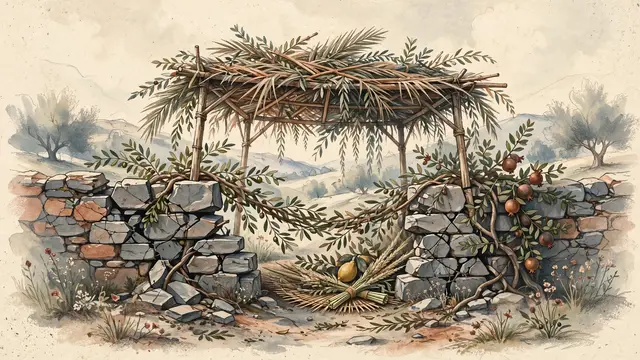
Professor Rafi Kerso reflects on the lessons of Sukkot, suggesting the holiday serves as a reminder to shed the illusions of permanence and security built up throughout the year. He argues that while individuals strive to create a sense of a stable, private 'home,' the temporary nature of the Sukkah challenges this perception, highlighting that true stability comes not from walls but from shared existence under one roof.
Kerso draws a parallel between the Sukkah's message and the state of Israeli society, which he contends has been preoccupied for years with constructing 'walls, fences, and borders' between various groups, including political divides (left vs. right), religious distinctions (religious vs. secular), and socioeconomic disparities (center vs. periphery), as well as ethnic lines (Ashkenazi vs. Mizrahi). Each group defines itself and, more detrimentally, defines others, with many believing they hold the sole claim to 'true' Israeli identity and leadership.
He posits that for the 'true home' of the nation to be stable, inclusivity is essential. While agreement on all matters is not necessary, and individuals need not abandon their beliefs or ideologies, unity is crucial for nation-building. The Sukkah teaches that people are required to be together, not identical, and the Israeli home will be preserved by learning to coexist despite differences, rather than by attempting to homogenize the population.
Ultimately, Kerso urges a shift in perspective, suggesting that before debating who is right or who should yield, Israelis should ask if they are capable of sitting together. He concludes that all human endeavors and possessions, homes, titles, positions, and even victories in arguments, are temporary. What will endure is the legacy left behind, a reminder that everyone is merely a guest, and the focus should be on shared existence rather than perpetual conflict over land, opinions, power, or governance.
Read the original at MaarivMentioned




