
Israeli Shekel Weakens Against Dollar, Raising Concerns Over Prices
Translated & summarized from Cursorinfo by baba
The story in 5 lines · by baba
- Israeli shekel weakens against the dollar, nearing a two-month low.
- Factors include U.S. interest rates, global dollar strength, and regional tensions.
- Weakening shekel may increase costs for imports, foreign travel, and online shopping.
- Prolonged depreciation could eventually affect domestic prices in Israel.
- Experts cite Israel's reserves as a support, deeming further decline not inevitable.
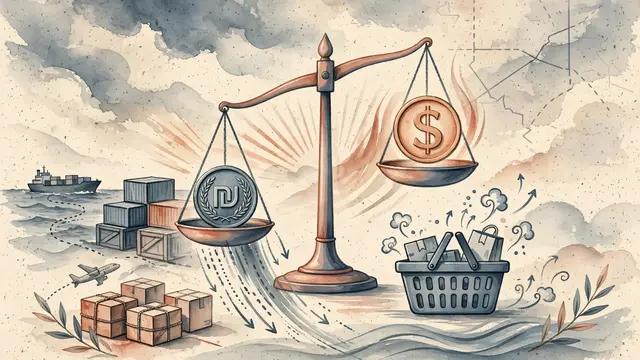
The Israeli shekel has significantly weakened against the U.S. dollar, nearing a two-month low. This shift in currency exchange rates could gradually impact the cost of goods and services for Israelis, particularly imported items, foreign travel, and online purchases from international retailers. On October 1, the Bank of Israel set the representative exchange rate at 3.066 shekels per dollar, an increase of 1.088% from the previous day. The dollar continued to strengthen, surpassing 3.07 shekels for the first time since July.
Several factors are contributing to the shekel's decline. These include the dollar's global strengthening, a widening interest rate gap between the U.S. and Israel, high yields on U.S. government bonds, and ongoing regional geopolitical tensions. Ilan Gildin, a partner at Karni Family Office and hedge fund manager, attributes the situation to a combination of financial and geopolitical elements. Higher U.S. interest rates make dollar-denominated assets more attractive while increasing the cost of currency hedging. Additionally, regional instability, such as Houthi attacks in Saudi Arabia and fears of escalation with Iran, heightens perceived risks, leading investors to favor the dollar during uncertain times.
The energy market has also seen changes, with oil prices rising approximately 1.8% and the yield on ten-year U.S. Treasury bonds reaching 5.21% after U.S.-Iran talks failed to yield an agreement. The dollar's strength is not limited to its performance against the shekel; the DXY index, which tracks the dollar against a basket of major currencies, has exceeded 101 points, reaching a more than two-month high.
For ordinary Israelis, a weaker shekel means reduced purchasing power for dollar-denominated expenses. For example, a $1,000 purchase that cost approximately 3,000 shekels at a rate of 3 shekels per dollar now costs 3,070 shekels at a rate of 3.07 shekels per dollar, excluding fees. Foreign travel, including flights and hotel bookings, as well as purchases on foreign websites, may become more expensive if transactions are conducted in dollars. Subscriptions and digital services priced in dollars will also see increased costs.
A prolonged period of shekel depreciation could eventually affect domestic prices in Israel, as the country imports a significant volume of goods, raw materials, and equipment. Importers facing higher shekel costs for dollar-denominated purchases might pass some of these increased expenses onto consumers over time. However, experts note that minor, short-term currency fluctuations do not automatically lead to price hikes. The duration of the weakening, the magnitude of the exchange rate movement, and the decisions of importers and retailers are crucial factors for any significant impact on inflation.
Conversely, some Israelis might benefit from a stronger dollar, particularly individuals and companies earning income in U.S. dollars while having substantial expenses in shekels. Experts do not currently consider a further decline of the shekel inevitable, citing Israel's current account surplus and the Bank of Israel's substantial foreign currency reserves as supporting factors. A decrease in geopolitical tensions could also shift the currency market's direction.
Read the original at CursorinfoMentioned


