
Israeli Ex-Soldiers Helped Capture Notorious French "Monster"
Translated & summarized from Cursorinfo by baba
The story in 5 lines · by baba
- Two Israeli ex-soldiers were robbed and attacked by a serial criminal in Paris.
- One woman remembered the license plate, leading to the suspect's arrest within two days.
- The perpetrator was known as the "monster of the Boulogne Forest."
- The women received varying accounts of support from the Israeli consulate.
- Their role in the capture was widely reported in the French press.
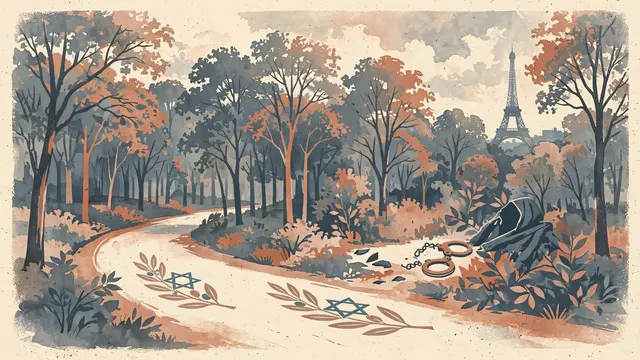
Two young Israeli women, Bina Fayner and Ora Joshua, recently discharged from the IDF, were traveling by hitchhiking through Europe in the summer of 1963 when they encountered a man who would later be dubbed the "monster of the Boulogne Forest." The driver of a blue Renault Dauphine picked them up near Paris, but soon veered off the main road into the Boulogne Forest, where he attempted to assault them and then stole their belongings. Crucially, one of the women managed to memorize the license plate number.
French police had been searching for this individual for months. He was known to prey on young female tourists, offering them rides and then forcing them off the road into secluded areas to rob them. He had successfully targeted approximately 20 women from various European countries and the US, none of whom could provide enough information to identify him. The only clue police had was the description of his blue Renault Dauphine.
After the encounter, Fayner and Joshua were left stranded in the forest without their passports, money, or belongings. A passing cyclist helped them reach a nearby village, where the local head summoned the police. Despite initial disbelief from the police chief due to the license plate belonging to a different region, Ora Joshua insisted on the number, which ultimately proved correct.
Following the incident, the women sought assistance at the Israeli consulate in Paris. Accounts differ on the reception they received. While the Israeli consul, Levi Locker, stated they were loaned a small sum and had their ship tickets reissued, the women described the consulate's response as indifferent, claiming they were initially told to hitchhike to Marseille for ticket copies and eventually received only a $20 loan.
Within 48 hours of the attack on the Israeli women, police apprehended the suspect, identified as a 42-year-old printer and father of three. The women identified him, but their stolen possessions, including passports and money, were not recovered; the "monster" had destroyed them. The French press widely reported the story, highlighting the role of the "two Israeli soldiers" in apprehending the criminal, with one newspaper stating that attacking them put the perpetrator at risk of capture.
Upon their return to Israel, the women's story garnered significant attention, with a report on October 13, 1963, detailing their adventure and the subsequent public interest, including a gathering at Shmuel Fayner's store in Givatayim to hear Bina recount her experience.
Read the original at CursorinfoMentioned
The same event, reported separately by each outlet. Open a few to compare what different newsrooms emphasize — and what they leave out.
