
Dollar's Rise to 3.07 Shekels Impacts Israeli Real Estate Differently
Translated & summarized from Israel Hayom by baba
The story in 6 lines · by baba
- Dollar strengthens to 3.07 shekels, up 10% from recent low.
- Israel's interest rate cuts contrast with global hikes.
- Low dollar aids Israeli inflation and allows rate flexibility.
- Real estate developers may see lower costs with a stronger shekel.
- Foreign buyers face higher costs for Israeli properties.
- Companies must manage currency exposure based on revenue and expenses.
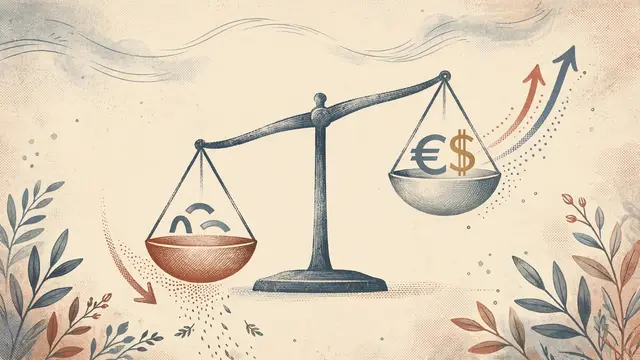
The Israeli shekel has weakened against the dollar, with the exchange rate hovering around 3.07 shekels per dollar. This represents a roughly 10% increase from the late May low of under 2.80 shekels, though it remains historically low. This currency movement occurs against a backdrop of global interest rate hikes, with the US Federal Reserve and the European Central Bank both raising rates in September. In contrast, the Bank of Israel has lowered its interest rate for the third consecutive time to 3.25%. This divergence is occurring alongside relatively moderate inflation in Israel, at 1.5% over the past 12 months.
According to IBI CFX, the dollar's relatively low exchange rate has helped maintain low inflation in Israel, providing the Bank of Israel with greater flexibility to reduce interest rates. This contrasts with the trend in the US and Europe. A continued decrease in interest rates could benefit the real estate market by reducing financing costs for developers and making mortgages more affordable for buyers. Historically, the real estate market boom coincided with very low interest rates, while rate hikes led to a significant slowdown.
The dollar's exchange rate also directly impacts the real estate sector, sometimes in opposing ways. For real estate companies operating in Israel and selling apartments in shekels, exposure to foreign currency can arise from imported materials, systems, equipment, and suppliers. Elad Rafael, Sales Manager at IBI CFX, notes that a stronger shekel can reduce the shekel cost of dollar-denominated expenses, such as purchasing materials. For example, a $1 million expense costs approximately 3.07 million shekels at a 3.07 rate, compared to 3.5 million shekels at a 3.50 rate.
However, a stronger shekel can make Israeli properties more expensive for foreign buyers whose wealth is held in dollars or other foreign currencies. A property priced at 4 million shekels would cost about $1.30 million at a 3.07 rate, versus approximately $1.14 million at a 3.50 rate, a difference of about $160,000. IBI CFX emphasizes that the impact on a real estate company depends on its specific business structure, including the currency of its revenues and expenses, payment schedules, and supplier contracts. Rafael advises companies to map their currency exposures to understand how exchange rate fluctuations affect their cash flow and profitability.
Read the original at Israel HayomMentioned
The same event, reported separately by each outlet. Open a few to compare what different newsrooms emphasize — and what they leave out.

Not the same event — other stories that share this one’s people, places, or theme: background, reactions, and follow-ups.
