
Balad Chairman Withdraws Knesset Candidacy After Supreme Court Review
Translated & summarized from NEWSru Israel by baba
The story in 6 lines · by baba
- Sami Abu Shehadeh withdrew his Knesset candidacy after Supreme Court signaled disqualification.
- The Supreme Court avoided a precedent-setting ruling by accepting Abu Shehadeh's withdrawal.
- Abu Shehadeh's disqualification stemmed from remarks about the October 7th Hamas attack.
- The court is also reviewing disqualifications of the Joint List, Ra'am, and MK Ofer Cassif.
- Decisions on other disqualifications are expected soon, with reversals likely.
- Abu Shehadeh will remain chairman of the Balad party.
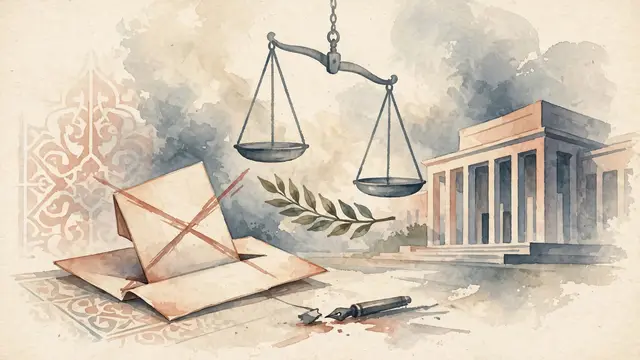
Sami Abu Shehadeh, chairman of the Balad party, has withdrawn his candidacy for the 26th Knesset elections after Chief Justice Yitzhak Amit informed him that a majority of nine judges favored disqualifying him. The Balad party officially announced the decision on the evening of October 1st. Abu Shehadeh, who held the third position on the Joint List, will not participate in the elections.
The decision followed a Supreme Court hearing on the Central Elections Committee's (CEC) disqualification of Abu Shehadeh. Amit stated that the judges unanimously found the politician's remarks "outrageous and repulsive," with a majority leaning towards upholding his disqualification. The Chief Justice suggested Abu Shehadeh voluntarily withdraw his candidacy, allowing the Supreme Court to avoid issuing a substantive ruling on his case. This move likely prevents a precedent-setting decision on whether Abu Shehadeh's actions met legal grounds for disqualification.
Balad declared that the withdrawal "does not mean the end of Sami Abu Shehadeh's political struggle and Balad's struggle." Abu Shehadeh will continue to lead the party, and Balad will remain part of the Joint List.
The CEC had previously voted to disqualify Abu Shehadeh. Attorney General Galit Bar'ev-Miara and State Prosecutor Amit Eisman supported the disqualification, citing materials that allegedly indicated support for armed struggle against Israel. Key evidence included an article by Abu Shehadeh published on October 8, 2023, the day after the Hamas attack, which he described as a "significant historical event from a military, political, and strategic perspective." He wrote that if "small and blockaded Gaza could do it, others can do it more effectively and simply."
During the Supreme Court hearing, Abu Shehadeh argued the fragment was poorly worded, denied supporting violence, and requested to run. Justices Alex Stein and Yechiel Kasher viewed the article as evidence of supporting terror. Simultaneously, the court reviewed the CEC's disqualification of the Joint List, the Ra'am party, and Knesset Member Ofer Cassif (Hadash). Unlike Abu Shehadeh's case, the Supreme Court has not yet published decisions on these matters. It is highly probable the court will overturn the CEC's disqualifications of these lists and Cassif.
The Attorney General's office, in contrast to Abu Shehadeh's case, stated there were no legal grounds to disqualify Cassif. The CEC had voted 19-5 with two abstentions to disqualify him. Cassif denied supporting armed struggle, claiming some statements were taken out of context and emphasizing his opposition to violence and support for non-violent struggle. He has not withdrawn his candidacy and awaits the Supreme Court's decision. The court will also rule on the fate of the Joint List and Ra'am, both previously disqualified by the CEC, though the Attorney General's representatives opposed their disqualification. Decisions from the expanded panel of judges are expected soon.
Read the original at NEWSru IsraelMentioned
The same event, reported separately by each outlet. Open a few to compare what different newsrooms emphasize — and what they leave out.









Not the same event — other stories that share this one’s people, places, or theme: background, reactions, and follow-ups.

