
Protest Erupts at European Premiere of IDF "Nezah" Film
Translated & summarized from Channel 13 by baba
The story in 5 lines · by baba
- Protest disrupts European premiere of IDF film "Nezah".
- Bereaved mother confronts filmmakers over "collateral damage" portrayal.
- IDF calls film "distorted" and denies claims on targeting and AI.
- Film features former soldiers accusing IDF of flawed decision-making.
- IDF details its rigorous target planning and civilian protection measures.
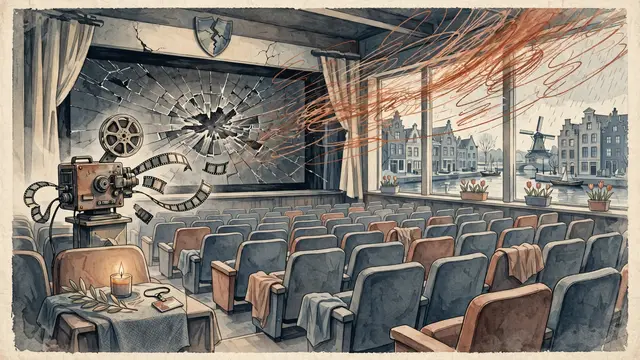
A screening of the film "Nezah" in Delft, Netherlands, was disrupted by a protest led by Sivan Taasa, whose husband and son were killed in the Hamas attack on October 7th. As the film began, Avichai Sharshan, CEO of the "Ad Kan" organization, projected "the horrors video" onto the cinema screen using a portable projector. Taasa then took the stage, confronting the filmmakers and audience, asking, "Look me in the eyes. You talk about collateral damage? My husband and son were murdered by Hamas. Where is that in your film?" Some audience members responded, "We don't care, shame on you, we don't want to hear." Sharshan stated that the film presents a "false" and "unthinkable" damage to Israel, vowing to combat the spread of antisemitism.
The IDF responded to the film, which features interviews with 24 former soldiers and officers accusing the military of flawed decision-making regarding collateral damage in Gaza. The IDF called the film a "distorted, misleading, and unrealistic picture" of target planning and execution. The military stated that the filmmakers did not submit their claims to the IDF for review or provide a copy of the film, forcing the IDF to rely on a scan provided by a representative at a public screening. The IDF asserted that its rules clearly distinguish between terrorists and civilians, prohibit targeting civilians, and require minimizing harm to them. They denied claims that the IDF approved an attack expected to kill 500 civilians, stating no such claim was ever seriously made. The IDF also refuted the notion that artificial intelligence independently selected targets, explaining that target identification is done by qualified intelligence officers, planning by professionals, and approval by operational commanders, with no automatic approval for attacks endangering a predetermined number of civilians.
The IDF clarified that the "Lavender" system is a database assisting intelligence researchers, not an approved target bank. They also stated that evacuation warnings do not permit ignoring the presence of civilians remaining in an area. The IDF maintains it investigates the results of its attacks, including unintentional civilian harm, contrary to the film's claims, and uses these investigations for lessons learned. The military suggested the filmmakers' "material errors" stemmed from not conducting thorough verification and source cross-referencing, and that interviewees, presented as intelligence personnel, often referred only to limited intelligence phases rather than the broader operational planning and approval process, which is outside the intelligence corps' responsibility. The IDF detailed its target planning process, involving legal advisors and commanders, and argued the film omits crucial context about the war and the IDF's conduct, including Hamas's deliberate embedding within the civilian population and the IDF's efforts to minimize collateral damage.
The IDF characterized the film's portrayal of its efforts to assess civilian casualties as indifference, explaining that such assessments are required by international law to ensure attack legality and allow for precautions or changes to minimize harm. The military stated it acts humanely, despite the filmmakers' efforts to conceal this, and is open to honest criticism and learning from substantiated claims. The IDF spokesperson acknowledged that mistakes occur in complex warfare and that suspected violations are investigated and addressed through disciplinary or criminal proceedings. A spokesperson for The Guardian, the film's producer, strongly rejected the IDF's claims about the interviewees' credibility, stating the newspaper fully stands by its reporting. The Guardian asserted that the IDF's attempt to portray the 24 participants as junior officers is false, noting that they included officers and soldiers involved in multiple stages of targeting, intelligence, execution, and final approval. The newspaper detailed its rigorous journalistic verification process, including cross-referencing leaked classified documents, verifying specific attacks, and confirming findings with a wider pool of confidential sources. The Guardian added that over the past three years, they interviewed more than 100 sources familiar with IDF systems used in the war, including senior commanders involved in approving attacks, and that their reporting, along with partners, is based on three years of detailed reporting. They also noted that other media outlets, including The New York Times, The Washington Post, and AP, have confirmed the IDF's use of AI systems and reduced civilian protection mechanisms in Gaza.
Read the original at Channel 13Mentioned
The same event, reported separately by each outlet. Open a few to compare what different newsrooms emphasize — and what they leave out.












Not the same event — other stories that share this one’s people, places, or theme: background, reactions, and follow-ups.



