
Israeli Legal Expert Warns Knesset Candidacy Barring Mechanism Targets Arab Representation
Translated & summarized from Arab48 by baba
The story in 5 lines · by baba
- Israeli legal expert warns disqualification mechanism targets Arab representation.
- Mechanism originally fought extremism, now used against Arab politicians.
- Sami Abu Shehadeh's disqualification highlights the alleged shift.
- Far-right parties like Otzma Yehudit were not disqualified.
- Expert calls for reconsideration of the disqualification law.
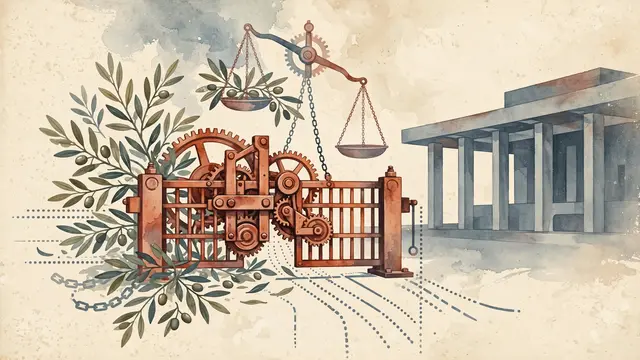
Mordechai Kremnitzer, an Israeli legal expert specializing in criminal, military, and constitutional law, has cautioned that the mechanism for disqualifying Knesset lists and candidates has shifted from its original purpose of combating extremism to being used against Arab political representation. He specifically cited the case of Sami Abu Shehadeh, head of the National Democratic Assembly, as evidence of this transformation.
Kremnitzer observed that while many disqualification decisions are predictable, the current election cycle presents two notable cases: Abu Shehadeh and right-wing Jewish nationalist groups. He described the public "attack" on Abu Shehadeh as unprecedented in its intensity and breadth, even drawing in parts of the Israeli opposition.
Referencing Basic Law: The Knesset, Article 7a, which allows for the barring of candidates or lists under specific conditions, Kremnitzer noted it was initially introduced to counter figures like Meir Kahane and racist ideologies. However, he argues that the Central Elections Committee's decisions and subsequent debates reveal the article is no longer serving democracy but its opponents, ironically wielded by those he calls "heirs of Meir Kahane" against Arab lists.
Kremnitzer questioned the meaning of democracy if Arab candidates and voters are denied the right to run and choose. He traced the problem to the law's original formulation, which included protecting the state's definition as "Jewish" in addition to safeguarding democracy, a condition that becomes more complex for Arab citizens as the state grows more religious, fanatical, and nationalistic.
Regarding Abu Shehadeh's disqualification, particularly after an article he published on October 8, 2023, Kremnitzer asserted that condemning statements does not legally justify disqualification. He stated, "Words must be condemned, but no one is expelled from the political arena because of them." The legal question, he argued, should have focused on whether Abu Shehadeh's actions harmed state security or systematically aided armed struggle against Israel, which he believes the answer to be negative.
He criticized the Attorney General, Gali Baharav-Miara, for initially suggesting serious consideration of Abu Shehadeh's disqualification and later fully supporting the move. He also faulted the head of the Central Elections Committee, Judge Noam Sohlberg, for departing from judicial neutrality and expressing support for the disqualification.
Kremnitzer warned that broadening disqualification criteria could lead to "prohibited discrimination based on national origin," turning the mechanism into a tool to prevent Arab minority representation due to statements deemed offensive to "the Jewish ear." He further argued the law itself is discriminatory, as it targets support for what is defined as "Arab terrorism" from an Israeli perspective without parallel application to "armed Jewish terrorism." He pointed to Israeli governments indirectly supporting armed groups, citing the transfer of "Qatari funds" to Hamas, and the lack of investigation into failures preceding the October 7 attack.
Kremnitzer believes the Supreme Court faces a difficult test in Abu Shehadeh's case, pressured by the Attorney General's opinion and broad public support for disqualification. He questioned whether the judges would withstand potential delegitimization campaigns.
Conversely, Kremnitzer criticized the rejection of the attempt to disqualify the "Otzma Yehudit" party, likening the decision-making process to "putting the cat to guard the milk." He cited a report by the "Zulat" organization detailing Itamar Ben-Gvir's "racist and anti-democratic agenda." He dismissed Ben-Gvir's substitution of "Death to Arabs" with "Death to terrorists" as not a genuine shift, especially when Ben-Gvir labels Arab Knesset members as "terrorists." He also critiqued the "voluntary immigration" concept promoted by Religious Zionism, stating that "voluntariness" loses meaning when conditions make dignified life impossible. He concluded that allowing "Otzma Yehudit" and "Religious Zionism" to remain legitimate political actors poses a direct threat to Israeli democracy.
Kremnitzer called for a reconsideration of the disqualification mechanism itself, stating that the tool created as a "shield for democracy" has become "a knife to its throat."
Read the original at Arab48Mentioned
