
European Leaders Criticize Israel's Actions in UN General Assembly
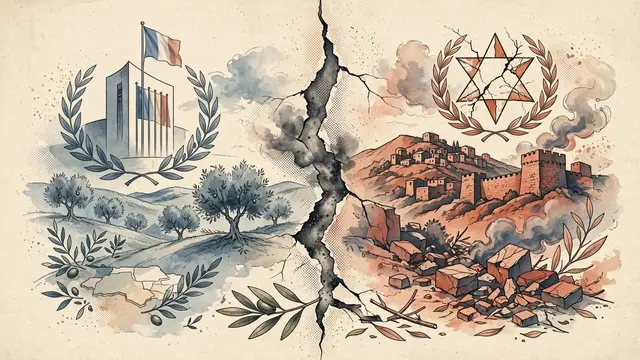
French President Emmanuel Macron and British Prime Minister Andy Burnham have sharply criticized the Israeli government's conduct in the West Bank and Gaza Strip during the UN General Assembly. Burnham stated that while the October 7th attack was "horrific" and Britain "will continue to stand by Israel," this does not justify the government's actions. Macron claimed Hamas has never operated in the West Bank, a statement met with strong rebuttal from Israeli Prime Minister Benjamin Netanyahu, who called it "outrageous ignorance" and cited the murder of a French citizen by Hamas in the West Bank. Gadi Eisenkot, head of the National Unity party, also dismissed Macron's statement as "extremely detached from reality on the ground," emphasizing Hamas's threat in the West Bank and the ongoing fight against terror beyond Gaza.
Macron also condemned the rise in settler violence in the West Bank, stating it "denies the legitimate existence rights of the Palestinian people." He further criticized former US President Donald Trump's peace plan for Gaza and his presentation of the council as a "diplomatic achievement." Macron questioned the credibility of international actors who "sit with folded arms" regarding the situation in Gaza, referencing the recognition of a Palestinian state by 12 countries a year prior and the lack of humanitarian access despite claims of peace.
In contrast, Donald Trump, in a prior speech, asserted that he brought peace while others spoke of it, confronted threats, and demonstrated American strength. UN Secretary-General António Guterres also criticized Israel, describing the destruction in Gaza as "unprecedented" and expressing concern that the expansion of settlements in the West Bank raises fears of ethnic cleansing.
The same event, reported separately by each outlet. Open a few to compare what different newsrooms emphasize — and what they leave out.









Not the same event — other stories that share this one’s people, places, or theme: background, reactions, and follow-ups.
