
US Federal Reserve Raises Interest Rates Amid Inflation Concerns
Translated & summarized from Srugim by baba
The U.S. Federal Reserve increased its interest rate by 0.25% to 4% to combat inflation driven by rising oil prices due to regional conflicts. This action contrasts with Israel's economic stability, where the Bank of Israel has lowered rates.
The story in 5 lines · by baba
- US Federal Reserve raises interest rates by 0.25% to 4%.
- Inflation linked to war in Iran and oil price hikes cited as cause.
- Rate hike aims to curb consumer spending and reduce prices.
- Israel's economy remains stable with falling interest rates.
- Bank of Israel has cut rates three times to 3.25%.
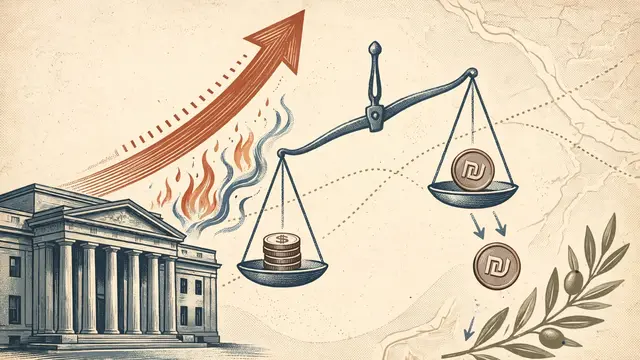
The U.S. Federal Reserve announced an interest rate hike of a quarter percentage point, raising the rate from 3.75% to 4%. This marks the first increase in approximately three years, with the last adjustment occurring in July 2023.
The primary driver for this decision is inflation, reportedly exacerbated by the war in Iran. While the direct economic impact of the war on the U.S. economy is considered minor, the closure of strategic waterways like the Strait of Hormuz and Bab-el-Mandeb has led to a surge in oil prices. Consequently, gasoline prices in the U.S. have reached record highs, triggering a wave of price increases across the broader economy.
To combat this rising inflation, the Federal Reserve is employing an interest rate increase as a tool to moderate consumer spending and, by extension, reduce prices. This contrasts with Israel's economic situation, which has remained stable despite nearly three years of continuous and costly warfare. The Bank of Israel has been able to lower its interest rate due to meeting annual inflation targets, which are relatively low at 1.5% per year. The Bank of Israel has already implemented three rate cuts totaling 0.75%, bringing the current interest rate to 3.25%.
Mentioned






