
Israel Faces Defense Budget Paradox Amid Surplus Funds
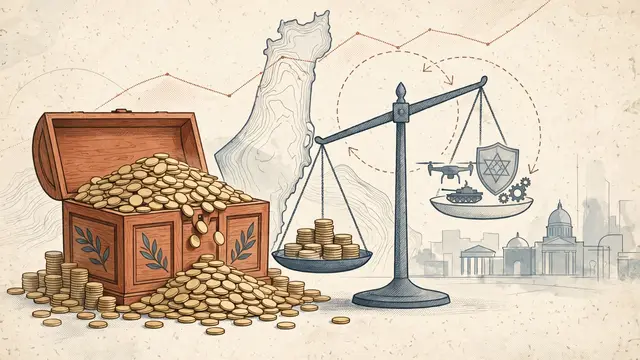
Behind the scenes, Israeli government ministries are engaged in complex negotiations to bridge a growing gap in the defense budget. The Israel Defense Forces (IDF) and the Ministry of Defense are currently operating under the 2026 budget law, while the Ministry of Finance's three-year budget plan, known as the 'Numerator,' sets future spending ceilings. This creates a bottleneck, as significant defense commitments, such as procurement and force build-up, require pre-defined funding sources. Without these, such initiatives are effectively blocked.
The Ministry of Finance's initiative aims to enable budgetary commitments for 2027-2029. However, this move could disrupt the operational continuity of defense industries, impacting raw material procurement, production lines, and employment. A senior defense official warned that this could lead to shortages in interceptors for air defense systems, reduced production of munitions and weapon systems, and delays in repairs and manufacturing.
Paradoxically, state tax revenues are significantly exceeding projections, with an estimated surplus of approximately 40 billion shekels. Simultaneously, other government ministries are spending less than allocated. This fiscal situation has created a surplus in the state treasury, contrasting sharply with the perceived funding shortages within the defense establishment.
Despite the surplus, the defense budget remains a point of contention. The cumulative deficit at the start of the year was 19.2 billion shekels, with an approved deficit for 2026 set at 111.11 billion shekels. Even in a worst-case scenario, the deficit is projected to be under 60 billion shekels, and in a milder scenario, around 90 billion shekels. This leaves a gap of at least 20 billion shekels between the projected deficit and the actual outcome, due to the high revenues and lower-than-expected expenditures. This creates an absurd situation where the state has funds, but defense procurement is stalled.
The same event, reported separately by each outlet. Open a few to compare what different newsrooms emphasize — and what they leave out.



Not the same event — other stories that share this one’s people, places, or theme: background, reactions, and follow-ups.



