Israel Intensifies Southern Lebanon Strikes Amid Escalation

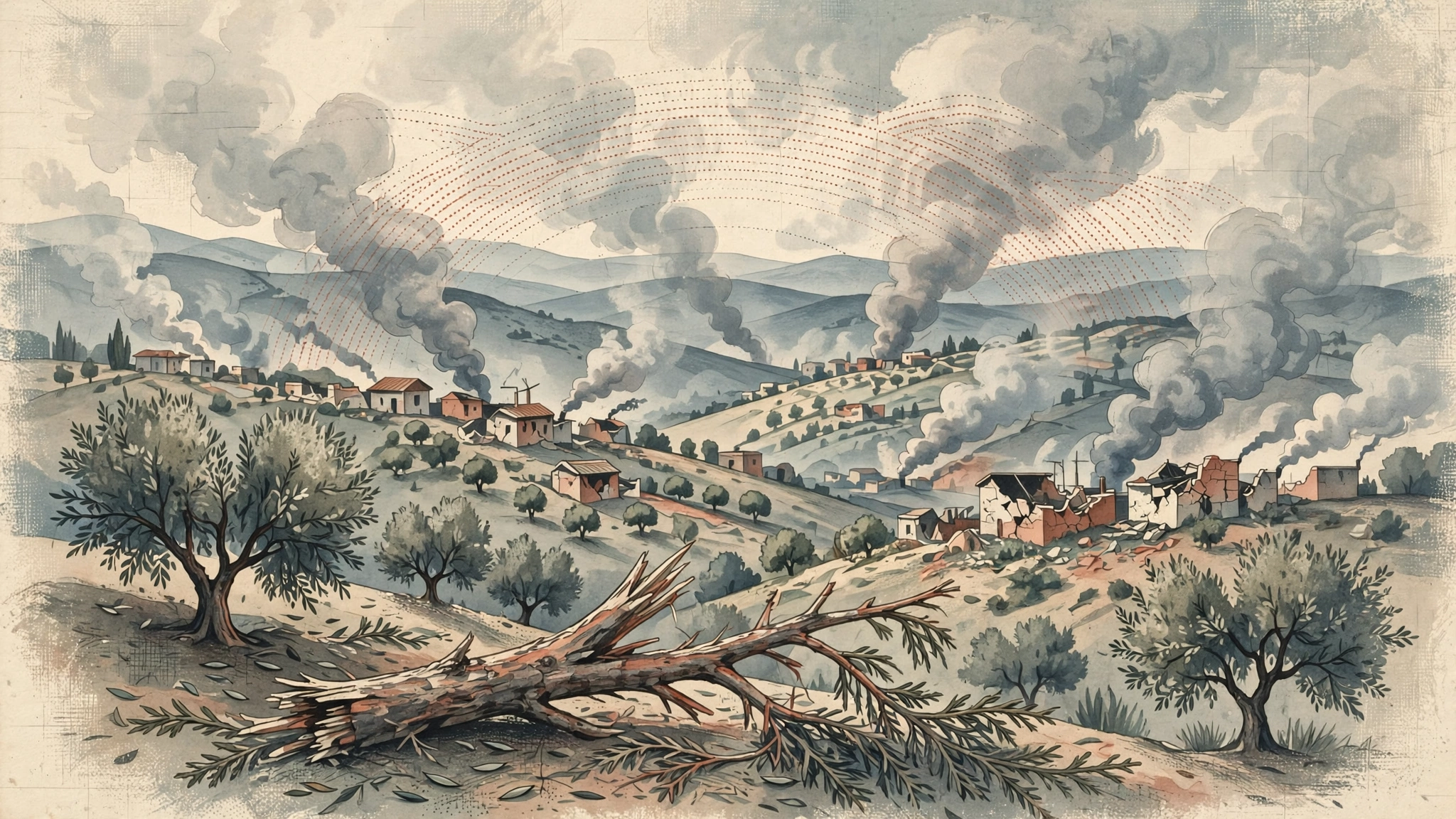
Israel has escalated its military operations in southern Lebanon, with intensified airstrikes and evacuation orders reminiscent of the period before the previous ceasefire. In less than 24 hours, at least 11 people were killed and several others injured, with ongoing rescue efforts in affected areas. The airstrikes have expanded beyond border regions to target areas deeper within southern Lebanon, including Deir az-Zahrani, signaling a potential Israeli attempt to impose a new reality on the ground.
Joyce Khoury, Al-Araby TV correspondent in Lebanon, reported that the current operations are not limited to targeted strikes but appear to be a "fire clampdown" on new areas, coinciding with civilian displacement and growing concerns about further Israeli territorial control. She noted that the scale of the raids reflects an expansion of Israeli operations, raising fears of a new battlefield situation.
Concerns are particularly high in the Nabatieh region, where calls have emerged for the Lebanese army to intervene and protect the area from potential Israeli control. The "Nabatieh Call," a past initiative, has resurfaced amid rising public anxiety over the expanding military operations. Khoury also highlighted Israeli movements in the Al-Mansouri and Zibqin areas, noting that renewed targeting of the Zibqin Valley raises fears of a repeat of the scenario seen in the Ali Al-Tahir highlands.
The ongoing escalation has weakened reliance on ongoing negotiations as a means to prevent war. Lebanese President had appealed to concerned nations for assistance in halting Israeli actions, underscoring the current negotiation track's inability to stop military operations. The eighth round of negotiations, previously scheduled for Rome in September, has been postponed indefinitely.
Hezbollah, according to Khoury, remains committed to avoiding a full-scale confrontation, despite launching drones towards Israeli forces in some instances. Possible explanations for this stance include Hezbollah's desire to avoid escalation, its diminished capabilities due to Israeli strikes, or Iran's reluctance to open a wider front. Hezbollah has not yet issued a clear statement regarding the fall of the Ali Al-Tahir highlands, which some consider strategically insignificant.
While the Israeli military attributes the recent escalation to Hezbollah drone launches, Khoury pointed out that Israeli targeting predates these operations. She stated that the launch of a few drones, often two at a time, is used by Israel as a pretext for widespread retaliatory airstrikes, which have led to a significant rise in civilian casualties. The airstrikes on Kafr Rumman and Deir az-Zahrani alone resulted in at least 11 deaths and five injuries.