Five Israeli Desalination Plants Offline Due to Algae Bloom, Raising Water Security Concerns

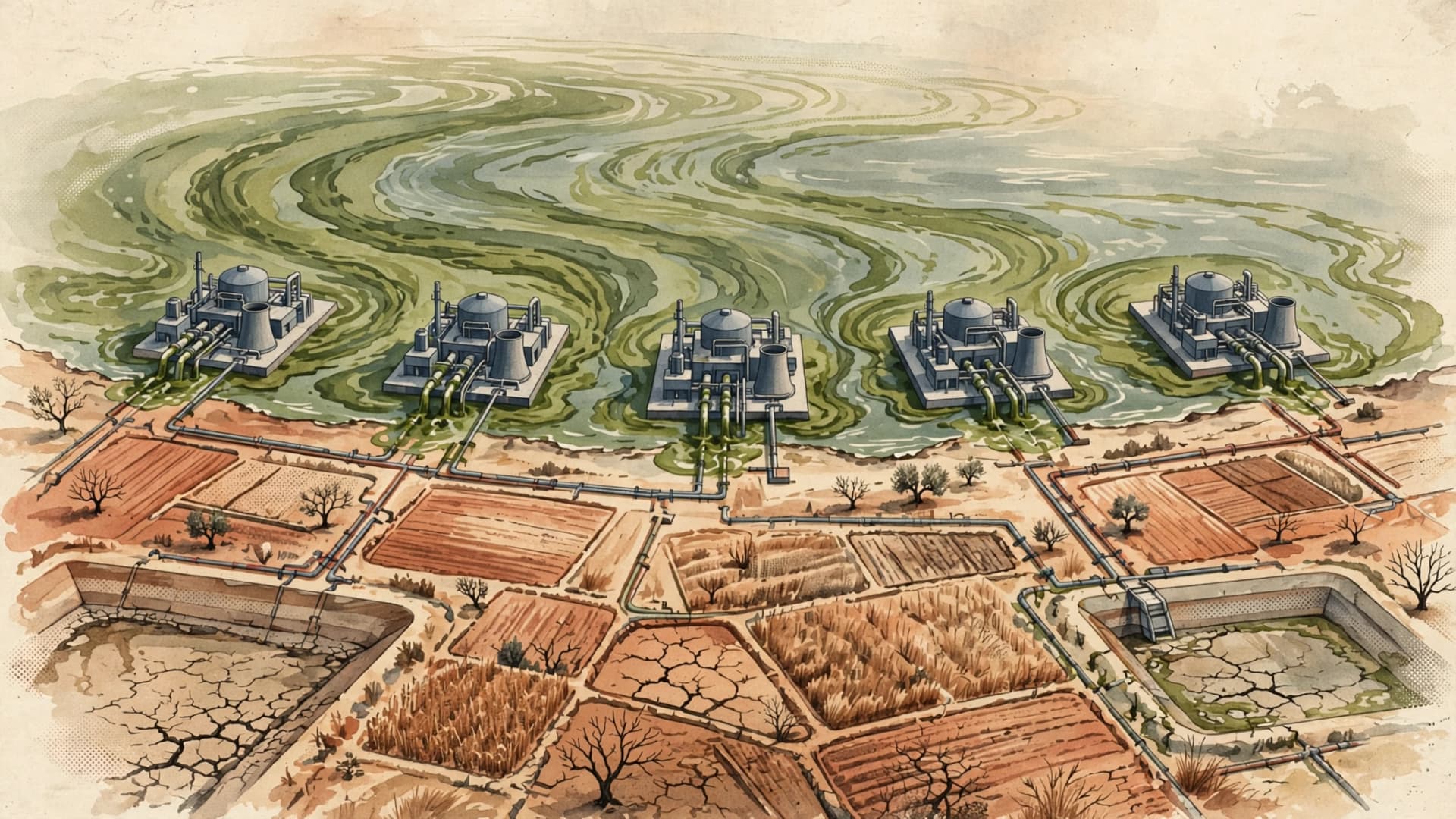
Five of Israel's major desalination plants have simultaneously ceased operations, an unprecedented event attributed to an unusual turbidity in seawater, likely caused by a bloom of microscopic algae originating from the Nile Delta in Egypt. Experts identify the algae as likely cyanobacteria, though precise species identification is ongoing. The algae are not toxic, so beaches remain open. The scale of the shutdown, affecting five plants at once, is what distinguishes this event, according to the CEO of the Hadera plant, the only one still operational. This incident highlights a vulnerability previously noted in a November 2024 State Comptroller report, which detailed 14 instances between 2007 and 2023 where seawater contamination halted desalination production for periods ranging from hours to five days. The report recommended the Health Ministry develop a specific plan for such scenarios and criticized the Water Authority for failing to complete a master water plan for over three decades.
In response to the shutdown, Mekorot, Israel's national water company, has activated its entire natural water system, currently supplying about 90% of normal summer capacity. However, this shortfall will be more noticeable during the summer months compared to winter. Farmers in southern Israel are already experiencing the impact, with irrigation halted for approximately 20,000 dunams of vegetable crops in the P'tachat Nitzana and Ramat Negev regions, jeopardizing significant investments. The Association of Farmers in Israel is urging the government to establish an urgent compensation framework.
Local authorities are preparing for potential worsening conditions. Ma'ale Adumim municipality has stocked water containers as a precaution, though water supply remains normal for now. Experts warn that such events are unavoidable and underscore the lack of adequate contingency plans. Professor Ido Bar-Zeev from Ben-Gurion University's Zuckerberg Institute for Water Research stated that the current algae bloom is a precursor to potential larger crises, such as a major oil spill. In such a scenario, desalination plants could be offline for up to six months, and current emergency plans are insufficient, primarily involving only facility closure.
The same event, reported separately by each outlet. Open a few to compare what different newsrooms emphasize — and what they leave out.


Not the same event — other stories that share this one’s people, places, or theme: background, reactions, and follow-ups.

