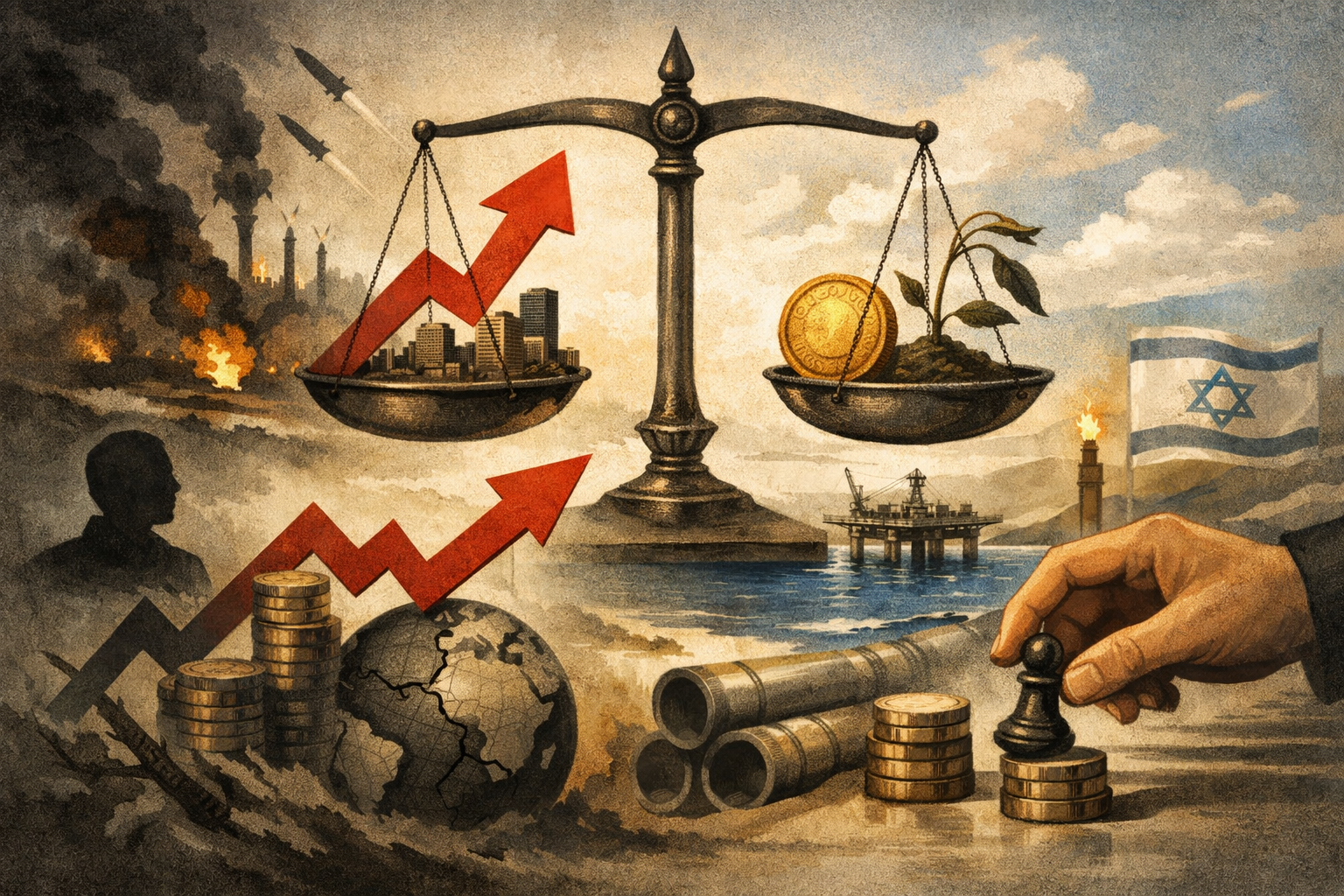
War Forces Central Banks to Reconsider the Inflation Growth Tradeoff

Central banks in the United States, Japan, Britain, Switzerland, Sweden and Norway are set to meet this week, but the meetings come as one of the biggest tests for monetary policy since the 2022 energy crisis. The renewed war with Iran, which the United States helped launch and in which it played a central role, has created a new geopolitical supply shock, pushing up energy prices and disrupting trade routes and supply chains. That has revived an old problem for central bankers, what to do when inflation rises just as growth weakens.
The European Central Bank faced that dilemma first. Last week it raised rates by 0.25 percentage points to 2.25%, its first increase since 2023, while cutting its 2026 growth forecast to 0.8% and lifting its inflation forecast from 2% to 3%. ECB President Christine Lagarde said the war in the Middle East is generating inflationary pressure and that the move fits most possible scenarios. The message, echoed by IMF economists, was that price stability now takes priority over growth, even if that means tighter policy after markets had been expecting rate cuts. The ECB is trying to defend its credibility and avoid letting energy inflation seep into broader price expectations and wages.
The Federal Reserve faces a more awkward situation. Its meeting will be the first under Kevin Warsh, appointed by President Donald Trump with the expectation that he would push easier policy. Instead, the war and a jump in US inflation to 4.2% in May 2026, the highest in about three years, have made rate cuts unlikely. Core inflation is still lower, about 3%, but it has risen for three straight months. Warsh now has to decide whether to ignore a temporary energy spike, or react to headline inflation for fear of setting off an inflation spiral. Cutting rates would signal tolerance for higher inflation, but raising them would anger the White House. Holding rates steady with a hawkish statement may be the most likely compromise.
Japan, Britain, Switzerland, Sweden and Norway face similar tradeoffs. Israel, however, is in a more unusual position. Despite the regional war, it benefits from relative energy independence thanks to natural gas reserves and from disinflationary pressure created by a stronger shekel. Inflation expectations in Israel rose in April but stayed near the target, then eased in late May and early June to around 1.5% to 1.6%. That means Governor Amir Yaron and his colleagues are not fighting a new inflation surge, and can still consider when to resume rate cuts, even as they confront military, political and fiscal risks.

