
Sign in to baba News

One account across the web, iPhone and Android — your subscription follows it.

or use an email code

Welcome — one more step

News Plus opens the cross-newsroom layer — who covered a story, who didn’t, and how each one worded it.

  • Unlimited follows
  • Alerts for what you follow (in the app)
  • Story alerts (in the app)
  • Hide read stories (in the app)
  • The daily brief by email
  • Headlines side by side
  • Who reported first
  • The whole archive
  • Your reading diet
  • Duki without the monthly limit

Eligible new subscribers get 7 days free, then $34.99 each year. Renews automatically until cancelled. Cancel any time in your account. Subscription terms.

Your subscription also unlocks the app.

Search stories

Type at least two characters. Results come from every newsroom baba reads.

↑↓ to move · ↵ to open · esc to close

Live Terminal

Sign in to baba News

Sign in to keep asking. News Plus removes the daily limit.

or use an email code

Keep the whole picture

News Plus opens the cross-newsroom layer — who covered a story, who didn’t, and how each one worded it.

  • Unlimited follows
  • Alerts for what you follow (in the app)
  • Story alerts (in the app)
  • Hide read stories (in the app)
  • The daily brief by email
  • Headlines side by side
  • Who reported first
  • The whole archive
  • Your reading diet
  • Duki without the monthly limit

Eligible new subscribers get 7 days free, then $34.99 each year. Renews automatically until cancelled. Cancel any time in your account. Subscription terms.

Your subscription also unlocks the app.

JPPI Poll: Israelis See Internal Polarization as the Biggest Threat
By ערוץ 7
Translated & summarized from Arutz Sheva by baba
JPPI Poll: Israelis See Internal Polarization as the Biggest Threat
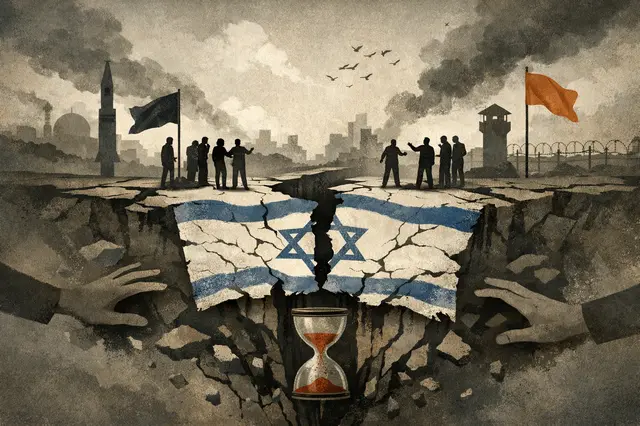
Editorial illustration generated by baba News — not a photograph of the event.
The story · English

A new annual report from the Jewish People Policy Institute says Israelis view domestic division as a greater danger than Iran or the Palestinian conflict. In the survey, 55% named internal polarization as the country’s main threat, compared with 23% who chose Iran’s nuclear program and 18% who chose the conflict with the Palestinians.

The report says 60% of Israelis believe there is a real risk of bloodshed inside the country, underscoring widespread anxiety. It also highlights deep social distance between groups: the ultra-Orthodox community received the lowest closeness score, 3.79, while secular Israelis rated their closeness to ultra-Orthodox Jews at just 1.81 out of 10.

Politically, the report found that support for the far right rose from 11% before the war to 19%. It also says younger respondents who identified as “left close to the center” reported shifting rightward because of the war. On democracy, 59% agreed it should combine majority rule with protection of human rights, but among Jews support for that broader definition has fallen compared with three years ago.

Only 31% agreed on issues tied to Israel’s identity and the Palestinian conflict. Among Jews, 36% said Israel is “not Jewish enough,” while 42% of secular respondents said it is “too Jewish.” JPPI President Prof. Yedidya Stern said the society shows “resilience and optimism, but also fragmentation and polarization,” and called for a long-term plan to build trust, with public leaders prioritizing cohesion and creating a “thin constitution” to manage disputes fairly and efficiently.

Read the original at Arutz Sheva
Full coverage · 3 outlets
67% right-leaningFirst: Arutz Sheva · Jun 14

The same event, reported separately by each outlet. Open a few to compare what different newsrooms emphasize — and what they leave out.


Center 1Right 2
Related stories · 5

Not the same event — other stories that share this one’s people, places, or theme: background, reactions, and follow-ups.


Open the live terminal
