
Turkey’s Interests Map Behind Erdogan’s Unusual Attack
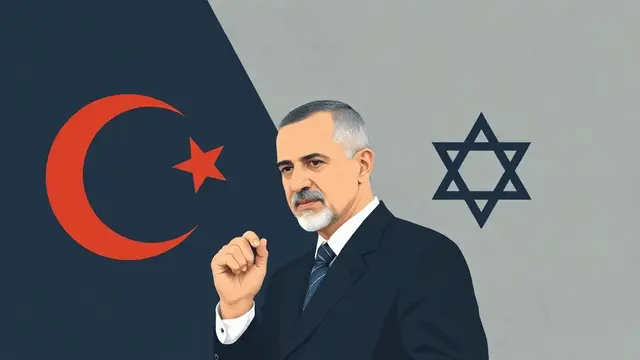
Turkey’s interests map behind Erdogan’s unusual attack on Israel. The Turkish president said Israel is threatening his homeland. Jerusalem and Ankara’s interests clash in several different arenas. The statement was also intended for domestic purposes. Tomer Almogor, N12. Published: 11.06.26, 13:38. Turkish President Erdogan | Photo: Reuters, Reuters
Briefly: Relations between Turkey and Israel have been escalating over the past two years, and Erdogan’s statement may signal another step up. The two countries are active in Syria and are deeply involved in developments there. At the same time, their interests clash in the eastern Mediterranean. An Israeli source told N12: “We are in a non-intensive conflict with Turkey.”
Turkish President Recep Tayyip Erdogan launched a sharply unusual attack on Israel yesterday (Wednesday), declaring that it “threatens Turkey.” His remarks come against the backdrop of increasingly escalatory Turkish rhetoric toward Israel, as Ankara’s map of interests collides with Jerusalem’s on a range of issues, from the eastern Mediterranean, through Iran, to Syria.
“We are in a state of non-intensive conflict,” an Israeli source told N12. “Turkey is a very big challenge for Israel. The echoes of that challenge are at the rhetorical level. It has gone beyond the accepted diplomatic level and become intolerable, you can say anything.”
“The things Erdogan says are not entirely new, they are refurbished,” the Israeli source added. According to the source, Turkey has no interest in entering a regional conflict with Israel, certainly not as a NATO member, but it has other means of acting against Jerusalem. “Erdogan has ways to deal with Israel. In the economic arena he halted trade, in the international arena, wherever the Turks can stick it to us, they do.”
Erdogan | Photo: AP
The Syrian-Lebanese arena
In his unusual statement before the Turkish parliament, Erdogan said Israel’s strikes in Syria and Lebanon have reached a point where they also directly threaten Turkey. Syria is a very important country for Turkey, which borders it and has invested heavily there, especially since the fall of the Assad regime and the rise of al-Sharaa.
“Turkey sees Syria as an area of influence and would like something like a little sister, a protectorate state, something the Syrians do not necessarily want,” explains Nimrod Goren, president and founder of the Mitvim Institute and co-director of Diplomeds. “Over the past year there has been tension between Turkey and Israel regarding Syria,” he adds, and clarifies that over the years Israel and Turkey knew how to coordinate red lines and policy in Syria in order to avoid conflict.
Erdogan’s reference to Lebanon is different, since Lebanon is not a Turkish sphere of influence and Hezbollah is far from being close to Erdogan, Goren explains. According to him, Erdogan is “riding” the situation created in Lebanon, where Israel is constrained by the United States and is receiving harsh international criticism for its activity in the country.
The eastern Mediterranean arena
Alongside the Syrian-Lebanese arena, Erdogan also referred in his threats to the clash of interests with Israel in the Mediterranean. “We are seeing ‘mischievous’ initiatives led by Israel also in the Mediterranean. No one should chase adventures in this region,” said the Turkish leader, adding: “Our response will be clear and strong if the rights of the Turks and Turkish Cypriots are violated in the eastern Mediterranean.”
“The eastern Mediterranean is a much more challenging arena for us with the Turks,” the Israeli source said. “From Turkey’s perspective it has an open conflict with Greece in the eastern Mediterranean, regarding sovereignty over islands and maritime territory, and Turkey has very good naval warfare capabilities.” The source added that Cyprus is also critical for Turkey.
These arenas of Erdogan’s collide with the deepening ties between Israel and Greece and Cyprus. At the end of 2025, the leaders of the three countries met in Israel and announced the deepening of their political and military cooperation, with Turkey in the crosshairs.
The prime minister, the prime minister of Greece and the president of Cyprus in a joint statement | Photo: Maayan Toaff, GPO
Goren explains that Israel has an alliance with Greece and Cyprus that threatens Turkey. “Turkey sees that the architecture of the eastern Mediterranean still exists after the war, it thinks this is a mechanism being operated against it. And it is making sure to display power in the Mediterranean space,” the expert says, defining the alliance as a “strategic problem” for Turkey.
The Israeli source who spoke with N12 made clear that in none of the arenas is the conflict expected to spill over into military means, but that “if you look at the map of probabilities and risks, it is higher in the eastern Mediterranean than in Syria and Lebanon.” According to him, there is a greater chance in that arena of a “mistake” that could lead to escalation.
Erdogan’s ambitions, and the American backing
In recent years Erdogan has stepped up efforts to expand Turkey’s power and position it as a regional power, and he sees Israel both as an obstacle to that and as a means of achieving his goal. He would like to weaken its power to ensure that he is one of the strongest actors in the region, while also setting himself apart and strengthening his standing through confrontations with Jerusalem.
Erdogan and Trump | Photo: Reuters
“This is also part of Turkey’s policy of differentiating itself from other Arab states, and being the more forceful and more active country toward Israel,” Goren says, explaining that this is a move intended to position Turkey in a stronger role in the region.
At the same time, Erdogan’s statements are intended for the ears of his domestic audience, much of which is hostile to Israel. Turkish power derives largely from American backing and the good relations between Trump and Erdogan. “Erdogan is very dependent on the Americans. The source of his strength is the trust Trump places in him,” the Israeli source says.
The source assesses that the Turkish leader’s rhetorical escalation will continue, but will not necessarily produce an actual policy change: “The Americans easily absorb the rhetorical level of the Turks. As long as the United States does not set red lines for Turkey on the rhetorical issue, and it does not, then the intolerable rhetoric will remain and intensify.”
Did you find a language error?
The same event, reported separately by each outlet. Open a few to compare what different newsrooms emphasize — and what they leave out.




Not the same event — other stories that share this one’s people, places, or theme: background, reactions, and follow-ups.

