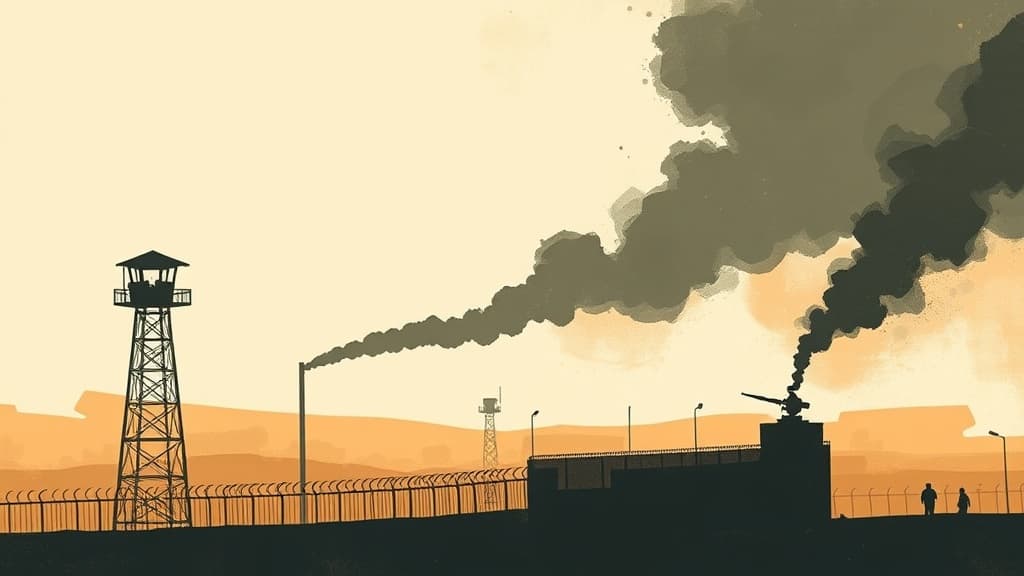
South Korean Shipping Tycoon Profits Millions Amid Hormuz Crisis

Amid the ongoing security tensions in the Middle East, global media coverage reveals unique perspectives on the evolving situation in Israel and the region. One notable report from Bloomberg highlights how South Korean businessman Ge Hyon Chung has capitalized on the Hormuz Strait crisis, turning it into a lucrative opportunity. While most shipping companies avoided the strategic waterway during the conflict, Chung's company, Sinokor Shipping, expanded its operations significantly by transporting oil from the United Arab Emirates through complex logistical maneuvers, including ships sailing without identification signals and mid-sea cargo transfers. This strategy allowed Sinokor to become a major player in one of the world's most sensitive shipping routes, with estimated revenues from just three tankers ranging between $60 million and $120 million. Even after the ceasefire, Sinokor continues to increase its tanker deployments in the Persian Gulf.
Chung, a relatively unknown figure outside the shipping industry, has rapidly transformed Sinokor from a container shipping company into one of the largest tanker fleet owners globally, controlling about 150 large tankers, nearly 40% of the world's available tanker fleet. This expansion was supported by MSC, the world's largest shipping company, which acquired half of Sinokor's operations.
Other international analyses include a Foreign Affairs article discussing Hamas's diminished power in Gaza following recent conflicts, noting that while Hamas's leadership and military capabilities have been severely weakened, both Hamas and Israel maintain the narrative of Hamas as the primary threat to justify ongoing hostilities. The article emphasizes the critical question of who will govern Gaza post-Hamas, warning of potential anarchy or the rise of more extreme groups without a credible moderate alternative supported by Arab states.
Additionally, the New York Times reports on Iran's recent large-scale funeral for Supreme Leader Ali Khamenei, portraying it as a demonstration of regime strength amid internal uncertainty. Tehran showed a mix of public mourning and societal contradictions, reflecting Iran's complex current state as it faces one of its most uncertain periods. The funeral served not only as a farewell but also as an attempt by the regime to shape the narrative of a new era.


