
Israel, Lebanon Sign Framework Peace Deal Amid Hezbollah Challenges
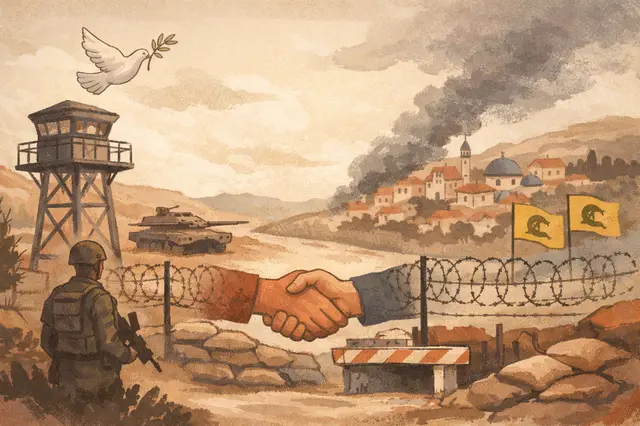
Israel, Lebanon, and the United States have signed a significant framework agreement aimed at establishing peace between the two countries. The deal, described by some as historic, acknowledges the difficult reality that peace depends on Hezbollah disarming, a condition the group is unwilling to meet. Israeli officials recognize Hezbollah as a terrorist organization not party to the agreement but capable of undermining it.
The agreement envisions the demilitarization of southern Lebanon, the dismantling of Hezbollah and other non-state armed groups, and the strengthening of the Lebanese army. However, Lebanon has historically failed to assert sovereignty over Hezbollah, the most powerful entity in its territory. Israel insists on a "redeployment" of forces rather than a withdrawal, with initial pilot zones where the Lebanese army will attempt to dismantle terrorist infrastructure and prove its control before further Israeli redeployments occur.
Symbolically, the agreement includes mutual recognition of each state's right to exist peacefully and securely, a language previously unimaginable in official documents between Jerusalem and Beirut. Yet Hezbollah remains a political and military force, with its parliamentary and governmental status to be negotiated in future peace talks. Israel anticipates Hezbollah may escalate attacks, underscoring the need to continue weakening the group.
Iran remains influential through Hezbollah despite the agreement's attempt to exclude it. Israeli security officials warn that any Iranian or Hezbollah aggression against Israel will be met with severe retaliation. The deal marks a starting point rather than a conclusion, offering Lebanon a chance to reclaim sovereignty and the U.S. a central role in training and supporting the Lebanese army. The critical test will be Lebanon's ability to enforce the agreement internally and Washington's commitment to sustaining the effort over time.
The same event, reported separately by each outlet. Open a few to compare what different newsrooms emphasize — and what they leave out.







Not the same event — other stories that share this one’s people, places, or theme: background, reactions, and follow-ups.


Ask About This Article
Duki reads it, and every newsroom on the same story, then answers with sources.