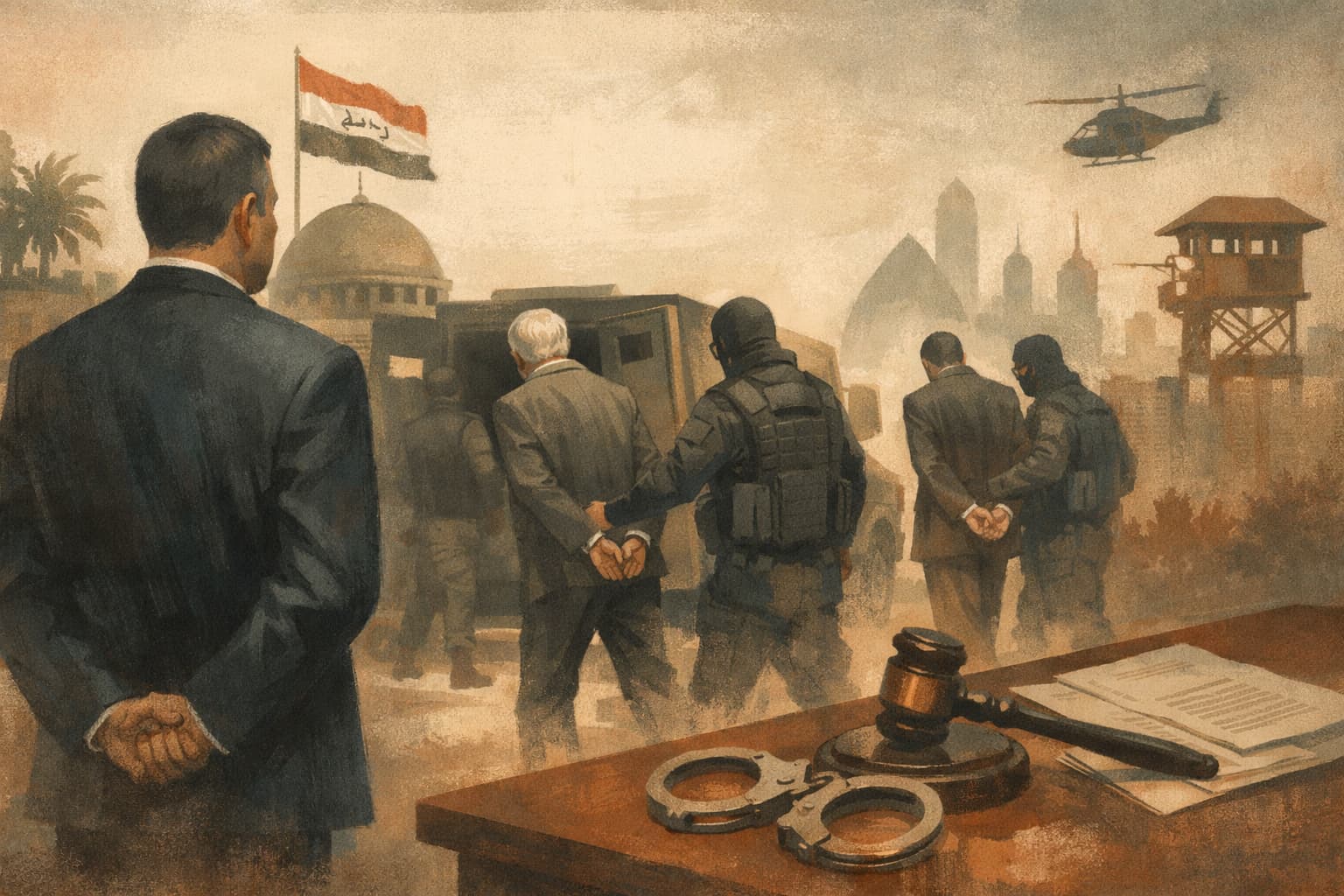
Iraq Conducts Unprecedented Night Arrests in Political Corruption Probe in Baghdad

An extensive wave of arrests took place overnight Sunday in Baghdad, Iraq, as part of an investigation into a major political corruption scandal. Security forces with armored vehicles raided the Green Zone, the heavily fortified area housing Iraqi government institutions and senior politicians. Among those detained was Muthanna al-Samarrai, a prominent Sunni politician and leader of the Iraqi "Al-Azim" party. Two additional Sunni members of parliament were arrested after their parliamentary immunity was lifted by the courts. Reports also indicate that several businessmen implicated in the case were taken into custody.
While corruption is a common issue in Iraq, often described as a kleptocracy, the scale of these arrests is unusually large. Iraqi newspaper Al-Arabi Al-Jadeed reported that Prime Minister Ali al-Zaydi personally supervised the operation. Al-Zaydi, a businessman who previously ran a bank sanctioned by the U.S. for money laundering to Iran, was appointed prime minister about two months ago. His selection came after the U.S. vetoed the return of former Prime Minister Nouri al-Maliki, known for his close ties to Iran's clerical regime.
Al-Zaydi's appointment was seen as a compromise among Shiite parties, including pro-Iranian factions. However, some political sources in Baghdad have warned the U.S. that al-Zaydi's leadership could increase Iranian influence in Iraq. This crackdown on corruption coincides with broader regional tensions, including reports of Iran establishing cells in Iraq to target Gulf states.
The arrests mark a significant development in Iraq's ongoing struggle with political corruption and external influence, with the prime minister taking a direct role in addressing these challenges. Further investigations and legal proceedings are expected as the government seeks to assert control over entrenched corrupt networks.
The same event, reported separately by each outlet. Open a few to compare what different newsrooms emphasize — and what they leave out.



Not the same event — other stories that share this one’s people, places, or theme: background, reactions, and follow-ups.


