
Gulf States Fear Trump's Iran Deal Could Undermine Regional Security
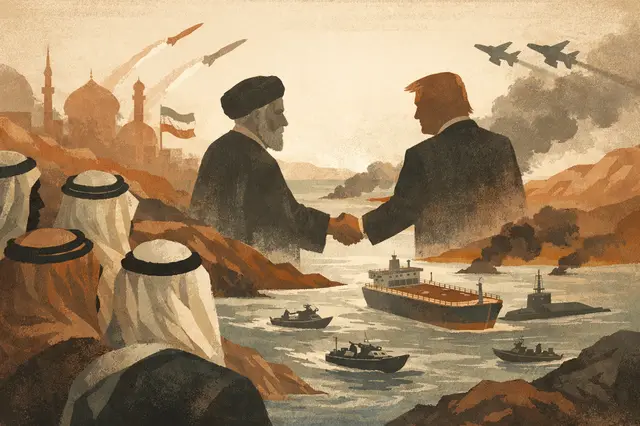
A CNN analysis says Gulf leaders are deeply uneasy about President Donald Trump’s emerging deal with Iran, fearing it could mark a “destructive turning point” for regional security. Their concern has sharpened after this year’s war involving the United States, Israel and Iran, during which Gulf states were repeatedly hit by Iranian attacks. The analysis says confidence in Washington has eroded, even after Trump told Qatar in May, “We are going to protect this country.”
Hassan Al-Hassan of the International Institute for Strategic Studies said the deal fits a broader American retreat from the region. He said reduced U.S. involvement in the Gulf and the flow of resources to Iran would further strengthen Tehran. Still, he said Gulf states backed the ceasefire because “for them, a bad deal is better than war.” Eurasia Group’s Firas Maksad said the latest war damaged faith in U.S. security guarantees, adding that “America as a strategic ally that can be relied upon is now highly questionable in Gulf states.”
The analysis highlights several specific worries. First, Iran would receive an official role monitoring commercial traffic in the Strait of Hormuz alongside Oman, giving it influence over its neighbors’ energy export routes. Second, the agreement does not address Iran’s missile program or its militia network. Trump defended that point last week, saying, “It is fair that Iran should have missiles if Saudi Arabia has.”
A third concern is a proposed $300 billion reconstruction fund for Iran, which Trump says would be financed by Gulf states, though Saudi Arabia says it has no details of any such proposal. U.S. Secretary of State Marco Rubio visited the United Arab Emirates, Bahrain and Kuwait this week to reassure partners, saying in Kuwait, “We want to include them in the talks about every decision that is made, we will not do anything that undermines the security of our longtime allies in the region.” He said the reconstruction funding issue is “very far down the road.”

