
Climate Crisis Fuels Extreme Weather, Threatens Israel's Water and Energy Security
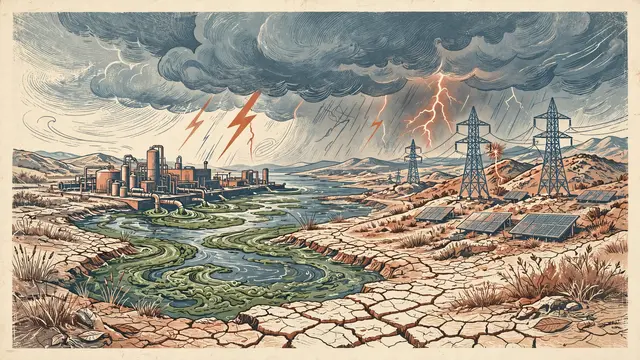
Israel and the world are experiencing unprecedented climate change impacts, including heatwaves in Europe, floods in Nepal and Tibet, and unseasonal August rain in Israel. Researchers also note the resurgence of a deadly amoeba in the Sea of Galilee, thriving in warmer waters. Dr. Dov Khenin, chair of the Israeli Climate Forum, warns that global warming is unlikely to be limited to 1.5 degrees Celsius above pre-industrial levels, with a best-case scenario of 1.8 degrees. He emphasizes that the true danger lies in extreme weather events and the increasing unpredictability of the climate system, likening it to a statistician drowning in a river with an average depth of two centimeters.
Khenin highlighted the recent water crisis in Israel, where desalination plants were shut down due to a bloom of micro-algae, likely from the Nile Delta, thriving in the warm Mediterranean Sea. This unexpected event disrupted the desalination membranes, leaving Israel with a severe water shortage, except for the Hadera facility. Despite this, Khenin stressed that technology is crucial for combating climate change, pointing to solar energy, storage, and efficiency as existing solutions. He criticized governments for continuing to subsidize fossil fuel industries, hindering progress.
The climate crisis disproportionately affects vulnerable populations, including the poor, those in peripheral areas, and outdoor workers, Khenin stated. He argued that the issue is not a "privileged" concern but a fundamental social and economic challenge. The Israeli Climate Forum, established in 2022, focuses on this climate-social nexus, promoting initiatives like a just transition in Haifa Bay, climate-resilient housing, and solar panels in unrecognized Negev villages.
Khenin expressed concern over the lack of political commitment to climate issues in Israel, noting that candidates focused on the environment often lose their seats. He urged immediate action, stating that the climate crisis will not wait for Israel to resolve its other challenges, including the ongoing conflict. He also linked climate solutions to national security, arguing that transitioning to renewable energy is vital for Israel's energy independence, as its current reliance on gas, coal, and oil makes it vulnerable to attacks and geopolitical instability.
The forum advocates for decentralized renewable energy, such as solar panels on rooftops, as a more secure and cost-effective alternative to fossil fuels. They also promote dual-use land solutions like "agrivoltaics," combining solar panels with agriculture, and developing renewable energy in Bedouin villages in the Negev. Furthermore, Khenin emphasized the importance of national food security, criticizing the Treasury's opposition to supporting Israeli agriculture and warning of dependence on foreign imports during crises.




