
Trump’s Iran war promises fall short in ceasefire framework
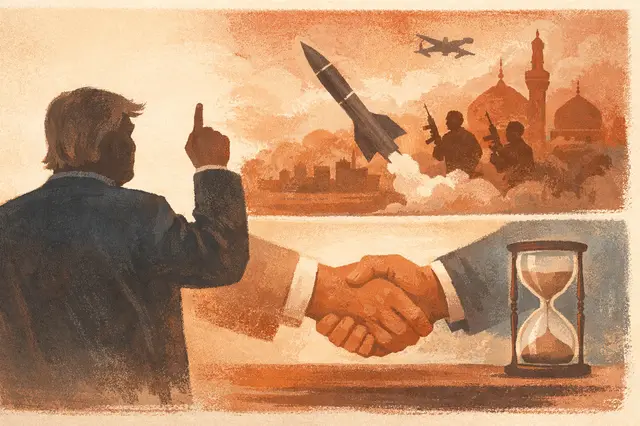
A new memorandum of understanding signed overnight between Wednesday and Thursday shows that several of President Donald Trump’s most sweeping wartime promises on Iran were not achieved. The article says Trump had promised there would be no deal except “unconditional surrender,” that Iran’s missile program would be sharply constrained, that Tehran’s regional proxies would be cut off, and that the Strait of Hormuz would remain open without transit fees. The agreement, however, appears to fall well short of those claims.
On ballistic missiles, the memorandum contains no direct mention of Iran’s ballistic missile force and says issues not included in the text will not be raised in final-status talks. The piece says this effectively preserves Iran’s right to keep its missile arsenal. Citing U.S. intelligence-based reports, it adds that Iran still holds about 75% of its mobile launchers and about 70% of the missile stockpile it had before the war, a total estimated at more than 1,000 ballistic missiles, a figure also acknowledged in Israel.
On proxies, Trump had vowed on the first day of the war that Iran would no longer be able to arm, fund, and direct its “terror armies” beyond its borders. Yet the memorandum does not mention Iranian proxies at all, meaning it does not restrict continued support for the Houthis, Hezbollah, Iraqi militias, and other affiliates. It also links the Gaza-related ceasefire to the ceasefire in Lebanon, reinforcing the connection between Iran and Hezbollah.
On the Strait of Hormuz, Trump had repeatedly promised free passage and told The New York Times four days ago that the strait would be permanently toll-free. Instead, the text allows commercial ships to pass without payment for only 60 days, after which Iran and Oman, in consultation with other regional states, are to determine the future arrangement. The article says this could amount to a new Iranian toll regime. Finally, while Trump had signaled that regime change in Iran might be ideal, he later said he “never cared” about it, and the article notes that Iran’s system remained in place and the Revolutionary Guards grew stronger.
The same event, reported separately by each outlet. Open a few to compare what different newsrooms emphasize — and what they leave out.







Not the same event — other stories that share this one’s people, places, or theme: background, reactions, and follow-ups.

