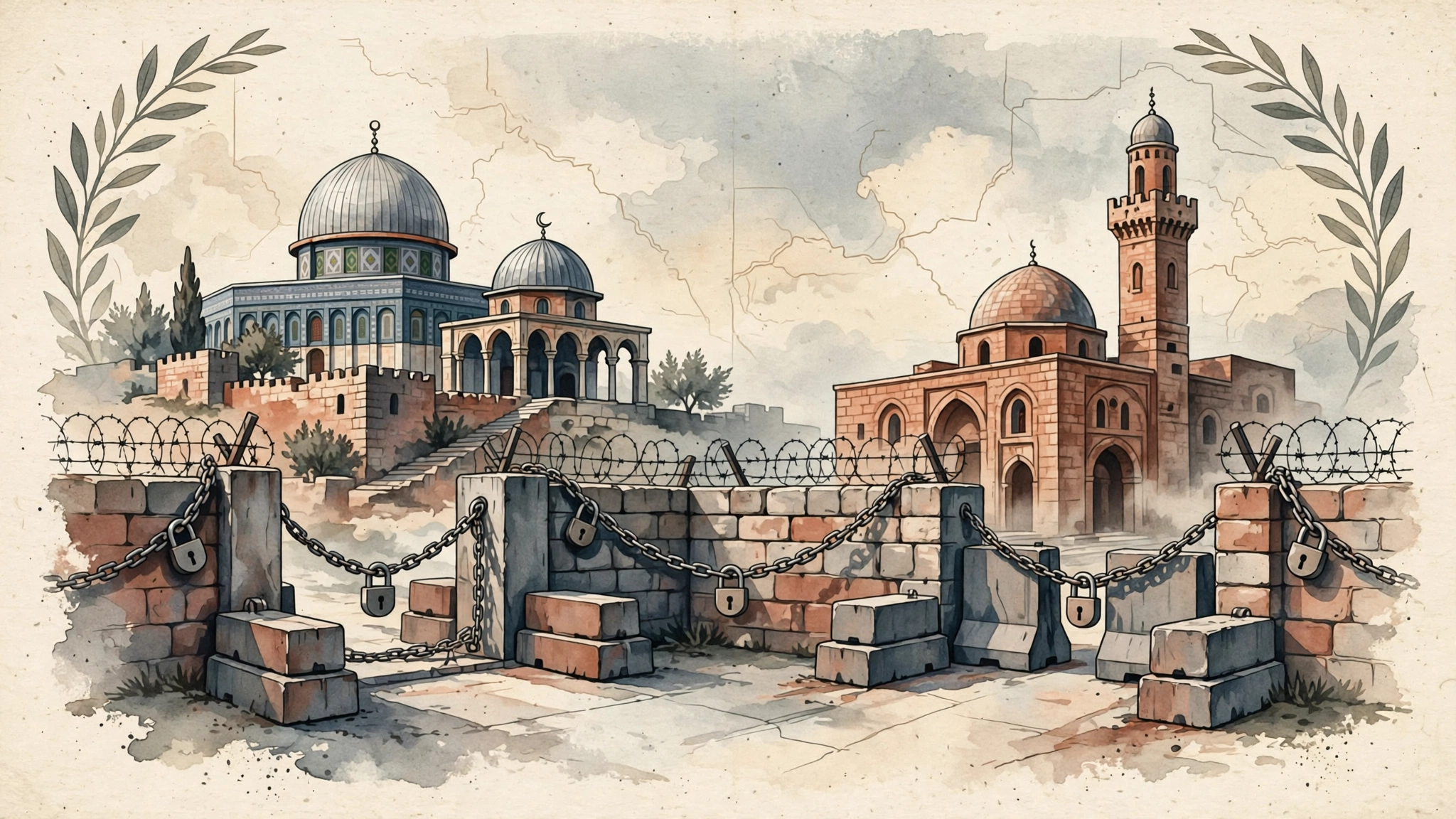
Israel Tightens Control Over Jerusalem and Hebron Holy Sites Ahead of Jewish Holidays

Israeli forces have intensified measures at the Al-Aqsa Mosque in Jerusalem and the Ibrahimi Mosque in Hebron, with Palestinians alleging these actions aim to alter the religious and historical status of the sites. In Hebron, the Israeli army has prevented the call to prayer at the Ibrahimi Mosque for 75 consecutive days. The mosque's director, Mu'taz Abu Sneina, dismissed Israeli justifications as weak, viewing the ban as part of an effort to change the mosque's identity and assert control.
Simultaneously, Israeli forces and settlers escalated actions in southern Hebron, including attacks, preventing electricity workers from performing their duties, and raiding the village of Al-Samou'a. In Jerusalem, 124 settlers, escorted by a heavy Israeli police presence, entered Al-Aqsa Mosque on Sunday through the Mughrabi Gate. According to the Islamic Waqf, settlers toured the courtyards and performed rituals in the eastern section under heavy guard.
Israeli authorities are also restricting Palestinian access to Al-Aqsa, confiscating IDs at the gates and increasing bans from the mosque, particularly as Jewish holidays approach. Sheikh Akram Sabri, the Al-Aqsa Mosque preacher, warned that the upcoming holiday season could be particularly dangerous due to calls from extremist groups for mass incursions and rituals within the mosque's compound. He urged Palestinians to increase their presence and vigilance at Al-Aqsa to preserve its Islamic identity.
These developments coincide with a rise in settler incursions into Al-Aqsa and the performance of Talmudic rituals in its courtyards, mirroring the restrictions at the Ibrahimi Mosque. With the Jewish holiday cycle imminent, Palestinian concerns are growing over potential escalations, prompting calls from Jerusalem and Palestinian leaders for increased presence at Al-Aqsa to counter perceived attempts to change the existing reality in the mosque and the holy city.
The same event, reported separately by each outlet. Open a few to compare what different newsrooms emphasize — and what they leave out.

Not the same event — other stories that share this one’s people, places, or theme: background, reactions, and follow-ups.


