
Iran Deal Could Strengthen Revolutionary Guards, Analyst Says
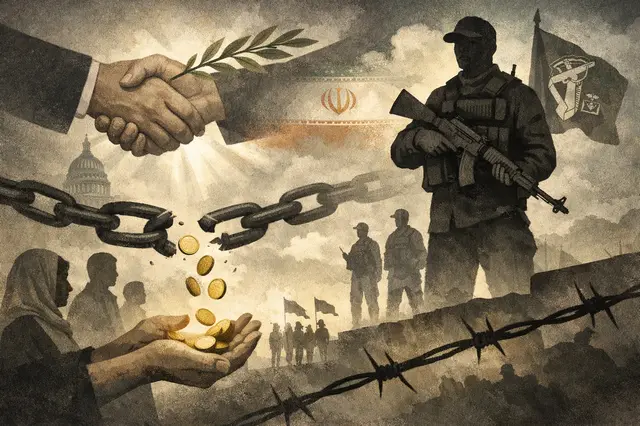
A deal between the United States and Iran would strengthen the Islamic Revolutionary Guard Corps and could discourage Iranian protesters from taking to the streets of Tehran, according to Ella Rosenberg, an Iran and Revolutionary Guards researcher at the Jerusalem Center for Public Affairs and Security. Rosenberg said the main practical effect for ordinary Iranians would be the lifting of economic sanctions, which could bring some relief and a modest rise in the rial. She stressed that this would not erase the daily economic hardship many Iranians face, but it would still be a small improvement.
Rosenberg argued that the Guards have already grown stronger during the war, especially through oil, gas and human trafficking, and therefore an agreement would not be critically damaging to them. Instead, she said, it would mainly provide them legitimacy in the eyes of regime supporters inside Iran. She also noted that if Washington keeps sanctions in place, other countries whose currencies depend on the dollar are likely to join the pressure campaign. In her view, sanctions hurt ordinary Iranians, while lifting them would ease conditions slightly but allow the Guards to tighten their internal control.
She said it is hard to know what is really happening inside Iran because the internet has been disconnected there for a long time. Rosenberg added that the very fact that a deal is signed, or even close to being signed, would boost the Guards’ standing psychologically, because it would signal who is dominant in the region. She pointed to a recent Iranian demand that the United States recognize the Revolutionary Guards as having the right to manage maritime traffic and trade in the Strait of Hormuz, calling it a new demand that shows the Guards are projecting more power than before the talks began.
That image of regime resilience, she said, also affects whether Iranians believe they can keep protesting and push toward political change. Rosenberg compared a possible fall of the Iranian regime to the collapse of the Soviet Union, saying that no one predicted that end, and that near the collapse people suffered economically while the KGB became stronger. She suggested there are some parallels between the two cases, even though it is still too early to know whether Iran will follow a similar path.
The same event, reported separately by each outlet. Open a few to compare what different newsrooms emphasize — and what they leave out.


Not the same event — other stories that share this one’s people, places, or theme: background, reactions, and follow-ups.



