
Rafael Enters the Race for the IDF’s Next Generation of Spy Satellites
Translated & summarized from Walla by baba
The story in 2 lines · by baba
- Rafael and Germany’s Reflex Aerospace announced development of a new optical satellite constellation for intelligence gathering, aimed at faster production and more frequent imaging from space.
- The companies say the system will use high-resolution payloads and electric propulsion, with the first launch planned for the fourth quarter of 2027.
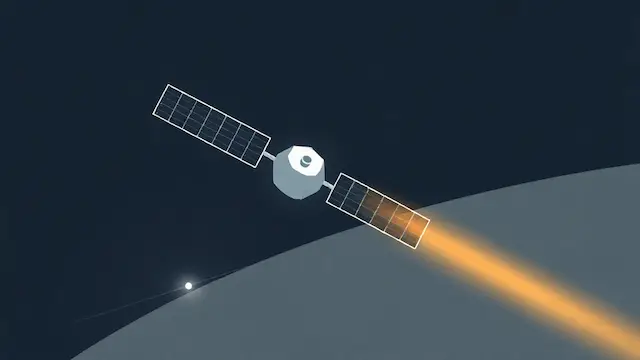
The Defense Ministry and Rafael delivered the “Or Eitan” system to the IDF / Defense Ministry Spokesperson’s Unit and Public Relations Department. A day after Israel Aerospace Industries’ “Ofek” spy satellite project received the Israel Defense Prize for the third time, this time for Satellites 13 and 19 and their contribution to the campaign in Iran, there is no doubt about the importance of satellites in combat for the IDF and for any other modern army. The Defense Ministry and the defense industries are already planning the next thing, smaller and cheaper satellites that can be launched in larger numbers, thereby providing more frequent passes over areas of interest and near real-time information. Satellite constellations are already being manufactured for civilian and military uses. Germany, for example, has ordered a constellation of such satellites equipped with radar.
Now it is Rafael that is opening the race for the next satellite the Defense Ministry will order, and it is the first in Israel to announce development of a photographic satellite constellation together with the German company Reflex Aerospace. This is a historic full circle, the Ofek project began 45 years ago by a decision of Prime Minister Menachem Begin, after a feasibility study carried out by Dr. Yonatan Mase from Rafael, who determined that an effective, relatively inexpensive spy satellite could be built weighing only 250 kg, a fraction of what the expensive spy satellites of the United States and the Soviet Union then weighed. However, Defense Minister Prof. Moshe Arens, who came from Israel Aerospace Industries, decided that Israel Aerospace Industries would lead the project and not Rafael. Rafael is now entering the optical satellite field together with the Munich-based space startup, founded in 2021, which has raised 50 million euros to date to build satellites weighing 50 to 100 kg, and has already built a civilian satellite. Germany is currently the European country with the largest defense budget and could become a customer for such a satellite flock.
In a statement, Rafael said that these are very high-resolution satellites with a high collection frequency, designed for rapid production and large-scale deployment, in order to provide a direct response to the growing operational need for continuous, high-quality intelligence from space. The system includes an imaging payload with resolution of up to 30 cm developed by Rafael, which has already been launched successfully into space in cooperation with a leading partner in the space industry, and provides high-quality images to leading customers in the field of imagery intelligence. Rafael will also supply the satellites’ electric propulsion system.
According to Guy Oren, Rafael vice president and head of the Intelligence and Space Directorate, “In an era in which customers in the defense and intelligence worlds cannot afford to wait hours for repeat collection or choose between resolution and availability, we have developed a new generation of satellites designed to bridge the gap. Together with our partner, Reflex Aerospace, we offer a precise response to the growing demand for satellite capabilities and the growing aspiration for state independence in the field. The combination of a payload with operational proven space capability and a satellite heritage, advanced processing capabilities based on artificial intelligence, and a fast manufacturing infrastructure for large constellations, allows us to offer a comprehensive system, with a high collection frequency, adapted to the threats that exist today in the fields of space and intelligence and to the threats that will develop in the future.”
Walter Belaheimer, CEO and founder of Reflex, added that “The new joint system embodies exactly the kind of missions for which we founded the company, our platform architecture is designed to maximize payload performance while meeting the accelerated schedules required today in the intelligence world. The cooperation with Rafael, which has an unrivaled electro-optical and intelligence heritage, makes it possible to bring to market a first-rate constellation at an unprecedented pace in the space industry.”
The two companies jointly invested in and financed development of the system, which is intended to address the growing global demand for high-quality, continuous satellite imaging. The first satellite launch is planned for the fourth quarter of 2027.
The same event, reported separately by each outlet. Open a few to compare what different newsrooms emphasize — and what they leave out.
Centre 1Other 1
