Just Educate, with Shneor Rochberger
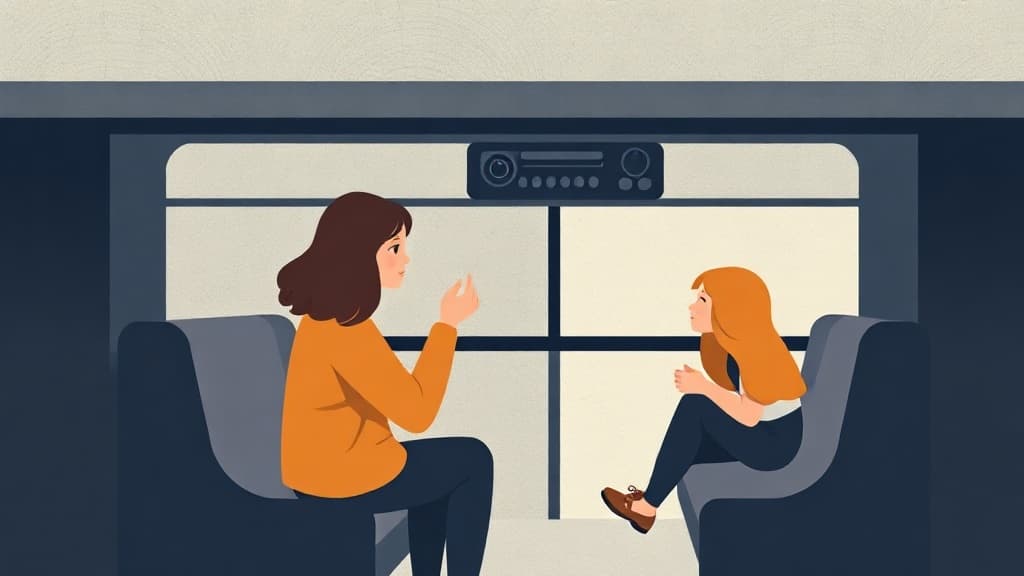
Dear parents, a few days ago my daughters came back from the bus in a state of shock. I tried again and again to understand what had happened, until the picture became clear: several older girls physically attacked a first-grade girl. They took her backpack, hurt her, and other girls stood around, laughed, and cheered.
I am writing these words from a very personal place. In my childhood, I experienced severe, even prolonged physical abuse in an educational setting, and the trauma stays with me to this day. Precisely for that reason, it is important for me to say to parents and educators: in every case where there is a strong and a weak, an aggressor and a victim, there must be clarity, firmness, and sharp boundaries.
"Man is born a wild ass." Wild, not evil. A child who has not learned boundaries often acts out of impulse, not out of malice. But that wildness must be stopped. A child who does not learn to restrain his strength may grow into an adult who will be far harder to correct. And here a distinction must be made: quarrels between siblings at home, even when they escalate into shoving and kicking, are a different matter. At home there are usually parents, reciprocity, and an adult holding the space. By contrast, violence outside the home is an event that must not be contained. There is no balance there, no owner of the place, and no repair if we, the parents and educators, do not bring it.
It is important that our children know that physical violence is not only beating. It has several forms. Direct violence, hitting, shoving, grabbing by force. Passive violence, blocking passage, standing in the doorway, preventing a child from leaving or doing what he wants. Indirect violence, sending another child to hurt someone. And there is also quieter violence, deliberately ignoring a child’s need in order to humiliate or hurt him. When things are called by their proper names, it becomes harder to excuse them. There is no "gray area" here.
School is only part of the story. Violence does not stop at its gates. The bus rides, the street, the playground, the stairwell, and the entire community space are places where there is not always a responsible adult. Precisely there, children may take advantage of the lack of supervision. Therefore our responsibility does not end in the classroom.
When a violent incident occurs, the Education Ministry’s director general’s circular requires immediate treatment and suspension from school. It is important to understand: suspension is not only punishment for the aggressor. It is first and foremost the creation of a safe space for the victim. A child who has been hurt needs to know that the framework protects him, that it takes what happened seriously, and that the aggressor will not stand beside him the next day as if nothing happened. This is the duty of educational institutions, and it is also a demand that parents are allowed, and even חייבים, to place before the administration.
Parents whose children do not behave violently also have a critical role. Teach them not to be silent, not to laugh when someone is humiliated, and not to stand by. If there is a child in the class who is hurt again and again, have them go to him during recess, sit beside him, look for him. If there is a child experiencing social difficulty, have them visit him, bring him something small, show him that he is not alone. That is exactly what we did that day with my daughters, בעקבות the distressing event with which I opened.
Did your child tell you about a violent incident? Even if he was not the victim, send a message to the teacher. Ask about it. Show the educational staff that it matters. Demand that the institution where your child studies be a safe space, and a place that truly educates for proper conduct toward others. Do not stay silent in the face of violence. Today it is another child, tomorrow it could be your child.
Explain to your children the different types of violence, and ask them to be on the right side of such events. Sometimes one child who speaks up, intervenes, or calls an adult makes the difference between abuse that continues and abuse that stops. Teach them to turn immediately to adults, and in the case of real physical violence, also to call for outside help. The very knowledge that someone is reporting and involving adults can stop aggressors in time.
Do not treat children’s violence with leniency. We have already lost precious children because of such violence, directly and indirectly, and enough for the wise man. Explain to your children that we are not a "wild city." We are human beings. Human beings do not stand by and laugh when a first-grade girl is humiliated and beaten on a bus. We are people of Torah, and people of Torah are first and foremost required to observe derech eretz, which precedes the Torah.
The article was written in the Achvata bulletin distributed throughout the country.




