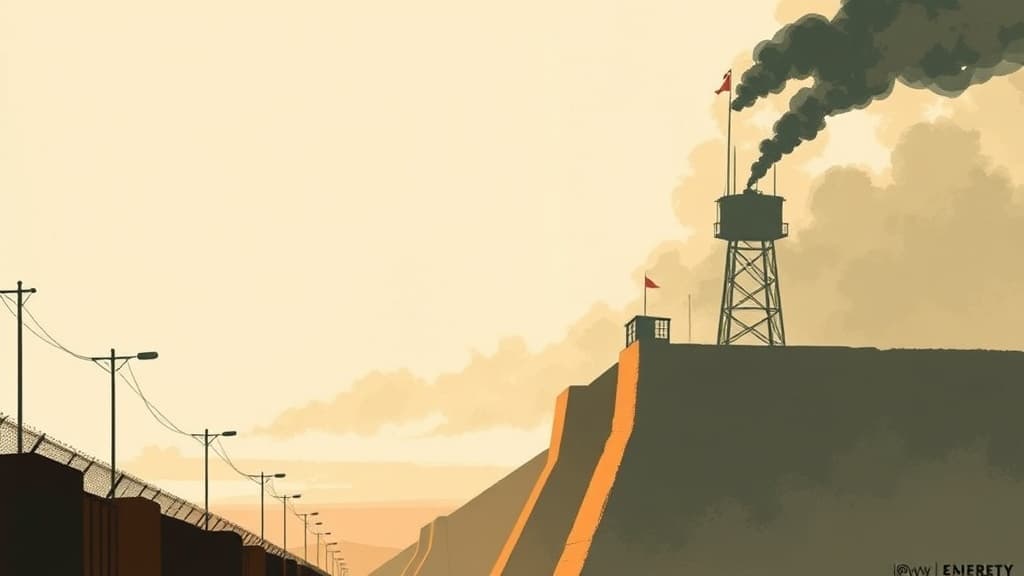
Saudi Arabia Blocks Major US Military Operation, Trump Responds With Threats

A severe diplomatic crisis erupted between Washington and Riyadh after Saudi Arabia refused to allow the US military to use its bases and airspace for "Operation Liberty," a large-scale military campaign announced by President Donald Trump. The Saudi refusal, driven by fears of Iranian retaliation targeting the kingdom's oil facilities, forced the US to cancel the operation and triggered direct threats from the White House to halt critical air defense missile supplies to Saudi Arabia.
The incident occurred amid escalating tensions during the conflict with Iran, when over 100 US warplanes were ready to launch from bases and aircraft carriers across the Middle East but were blocked by Saudi Arabia's airspace closure. This unprecedented move, revealed by US officials, led to the cancellation of the operation hours after Trump's announcement and sparked a diplomatic fallout including canceled official visits and harsh accusations, raising concerns about the long-standing security architecture in the Persian Gulf.
Tensions worsened after US Secretary of State Marco Rubio visited Gulf states but notably excluded Saudi Arabia, which Riyadh perceived as a deliberate insult. This followed Crown Prince Mohammed bin Salman's rejection of a G7 summit invitation in protest of US war management. Despite US denials of ill intent and a positive joint statement with Gulf countries, sources confirm the deepest rift in decades. Saudi Arabia warned the White House that attempts to overthrow the Iranian regime would close the Strait of Hormuz, disrupt energy markets, and harm the US economy and regional stability.
Despite warnings, the US allied with Israel in the conflict, provoking precise Iranian missile and drone strikes on critical energy infrastructure in the Gulf, including Saudi oil facilities at Ras Tanura. In response, Crown Prince Mohammed bin Salman shifted to de-escalation efforts via Pakistani mediation and refused to cooperate with Trump's tanker protection operation, fearing further escalation.
The Saudi refusal angered Washington, Israel, and the UAE, which recently left OPEC and strengthened security ties with the US and Israel. The White House issued a stern ultimatum threatening to cut missile shipments vital for Saudi defense against Iran. Although Saudi Arabia eventually lifted the restrictions, the damage was done: the US did not resume Operation Liberty and instead repositioned naval forces covertly. The Pentagon is now reassessing deployments to more stable regional allies.
The root of the crisis lies in a fundamental disagreement over the war strategy. While the Trump administration pursued an aggressive approach to subdue Iran, Saudi Arabia felt its longstanding alliance with the US failed to grant it real influence over decisions, despite bearing the direct economic and security costs. Last fall, Crown Prince Mohammed bin Salman received a warm welcome at the White House, with Trump praising him despite international criticism over the Jamal Khashoggi case. However, the evolving military reality has altered the dynamics, with Saudi leadership choosing to absorb pain to protect its citizens and assets, as noted by former Saudi intelligence chief Prince Turki al-Faisal.
The same event, reported separately by each outlet. Open a few to compare what different newsrooms emphasize — and what they leave out.





Not the same event — other stories that share this one’s people, places, or theme: background, reactions, and follow-ups.