
Europe Faces Unprecedented June Heatwave Shattering Records and Infrastructure
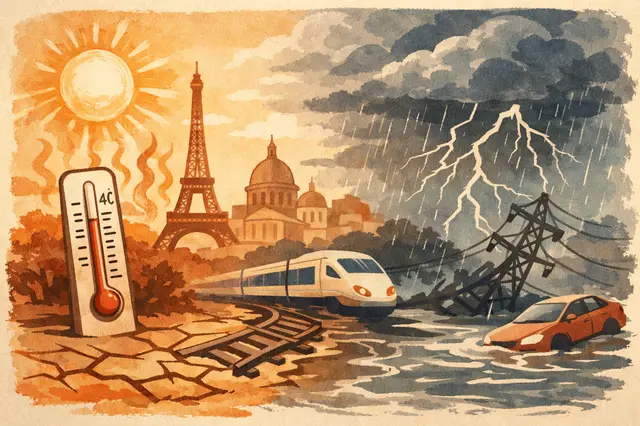
In June 2026, Europe is enduring an extreme heatwave that has transformed the continent from its traditionally cool and green image into a scorching furnace. Scientists describe this heatwave as the most severe ever recorded in the region, with temperatures reaching levels previously deemed statistically impossible just fifty years ago. Countries from France to Denmark and the UK to Slovakia are witnessing decades-old temperature records collapse one after another.
Germany recorded nearly 42 degrees Celsius, with a new national high of 41.3 degrees near Saarbrücken. Denmark experienced its hottest day since records began in 1874, and Slovakia reported its warmest night ever, with temperatures not falling below 26.3 degrees Celsius. France and the UK also broke all-time June heat records, with oppressive nighttime heat preventing bodily recovery and causing deadly health impacts.
The heatwave is not only affecting people but also Europe's infrastructure, which was designed for cooler climates. In Germany, the asphalt on the A7 highway cracked due to the intense heat, and railway tracks across the continent warped, causing major disruptions. Plastic traffic lights even began to melt and deform. In France, two nuclear reactors were shut down because river water used for cooling became too warm, and in Amsterdam, bridges were sprayed with water to prevent metal expansion and structural damage. Ironically, a London conference on managing extreme heat was canceled because the venue lacked air conditioning and became too hot.
The human toll is severe, with dozens drowning in open water sources in France and the UK while trying to cool off, and young children dying inside overheated cars. Scientists warn this is only the beginning, as Europe is warming faster than any other continent. What is now an extreme heat event is expected to become the new normal. With the strengthening El Niño phenomenon, 2027 is predicted to be even hotter, raising urgent questions about Europe's ability to adapt to its increasingly fiery future.
The same event, reported separately by each outlet. Open a few to compare what different newsrooms emphasize — and what they leave out.







Not the same event — other stories that share this one’s people, places, or theme: background, reactions, and follow-ups.
Ask About This Article
Duki reads it, and every newsroom on the same story, then answers with sources.