
Lebanese Army Warns Against Security Breaches Amid Hezbollah's Rejection of Israel-Lebanon Deal
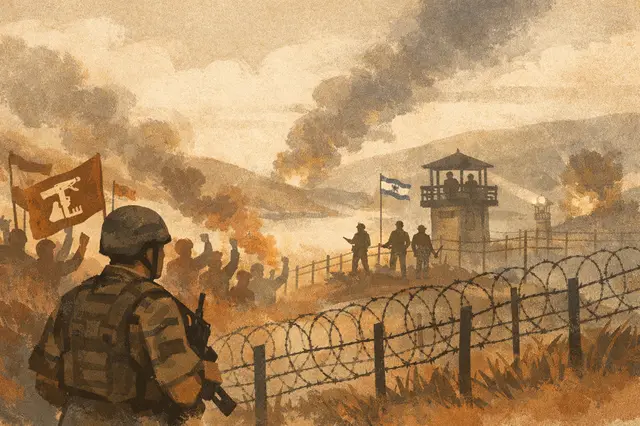
Following the recent framework agreement signed between Israel and Lebanon, the Lebanese Army issued a stern warning against any reckless actions that could threaten civilian peace. The army emphasized the importance of unity and solidarity to overcome threats facing the country and called on citizens to act responsibly amid calls for protests in Beirut and other regions against the agreement. The statement stressed that the army will not tolerate any security violations, including road blockades or invasions of public and private property, which could have unpredictable consequences.
This announcement came after Hezbollah Secretary-General Naim Qassem condemned the framework agreement, labeling it "nonexistent" and crossing red lines. Qassem demanded the cancellation of the agreement and its replacement with a memorandum of understanding between Iran and the United States. He asserted that no one has the right to deny Lebanese people their right to defend themselves and their land from occupiers and killers.
Earlier, Lebanese Parliament Speaker Nabih Berri cautioned citizens against sectarian conflicts. On Friday, Hezbollah supporters held protests in the Dahieh district opposing the agreement, which were dispersed by Lebanese security forces. Hezbollah sources told RED TV that the protest was spontaneous and that the group condemns any harm to the Lebanese Army. However, Hezbollah supporters blocked roads near Baalbek later that evening.
A political figure opposing Hezbollah described the Israel-Lebanon framework agreement as a historic achievement that isolates Hezbollah, particularly due to explicit calls for its disarmament. While political groundwork has been laid, practical implementation on the ground may take time. The source predicted Hezbollah would not completely sabotage the agreement but would attempt to delay its implementation and the Lebanese Army’s deployment. Hezbollah and its Iranian backers are reportedly caught in a dilemma, as obstructing the deal also delays Israeli withdrawal.
Despite Hezbollah ministers remaining in the government that signed the agreement, the Lebanese leadership views the deal as a necessary step, believing that without it, Iran would claim credit for the Israeli withdrawal. Meanwhile, the Shia Amal Movement issued a statement rejecting the agreement, opposing direct negotiations with Israel and criticizing the deal as unbalanced, politically and sovereignly dangerous, and detrimental to Lebanon’s national interests and institutions.
The same event, reported separately by each outlet. Open a few to compare what different newsrooms emphasize — and what they leave out.


Not the same event — other stories that share this one’s people, places, or theme: background, reactions, and follow-ups.



Ask About This Article
Duki reads it, and every newsroom on the same story, then answers with sources.