
Hormuz attack exposes Oman’s balancing act as Iran warns shippers
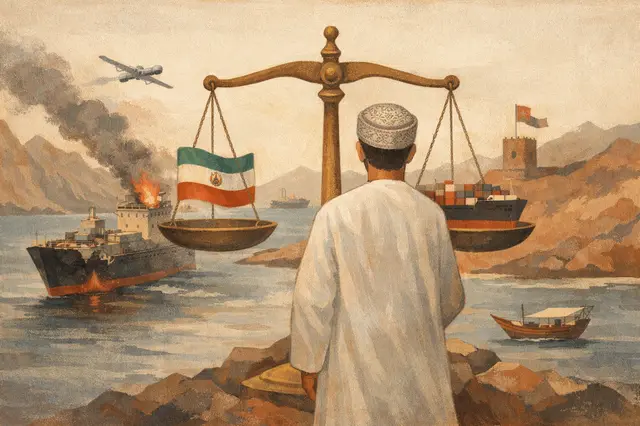
The United States had not issued an official response as of Thursday night to Iran’s attack on a ship in the Strait of Hormuz, which appears to have used a drone that damaged the vessel’s bridge but caused no casualties. The strike came near Oman’s coast, hours after the Islamic Revolutionary Guard Corps Navy warned ships not to use sea lanes in the strait that have not been approved by Tehran.
After the attack, traffic through the strait was halted again, despite President Donald Trump’s claim that the United States effectively controls this vital waterway. Many vessels are using an alternative route in the southern part of the strait, near Oman’s shoreline, rather than the route Iran has ordered them to use. Tehran says that route is unacceptable and dangerous, and warned ships to stay within recognized lanes. Iranian forces also said they would act against vessels that do not comply, and the attack appeared to follow that threat.
An Iranian source quoted by The New York Times said Oman’s provision of alternative routes angered Iran and appeared to challenge its control over the shipping lane. The same source said Oman is in a difficult position, because it is working with Iran on a management mechanism for the strait while also facing U.S. pressure not to allow Tehran to collect fees there and to keep the passage open. Iran says that after the 60 days covered by the memorandum of understanding, it will be able to charge passage fees, and the revenue has been estimated at $40 billion a year.
Oman, a wealthy neighbor south of Hormuz, presents itself as a neutral mediator and has served as a key regional go-between, including between Iran and the United States and between Iran and Saudi Arabia. Last month, however, it emerged that Oman had discussed cooperating with Iran on collecting tolls from ships using Hormuz, a mechanism the two countries are now said to be developing. Oman has also benefited from the war: unlike other Gulf states, it has largely avoided Iranian attacks, kept exporting oil through ports on the Arabian Sea, and saw revenue rise 13%. Its ports also gained business as cargo was rerouted from the United Arab Emirates overland through Oman.
The same event, reported separately by each outlet. Open a few to compare what different newsrooms emphasize — and what they leave out.

Not the same event — other stories that share this one’s people, places, or theme: background, reactions, and follow-ups.



