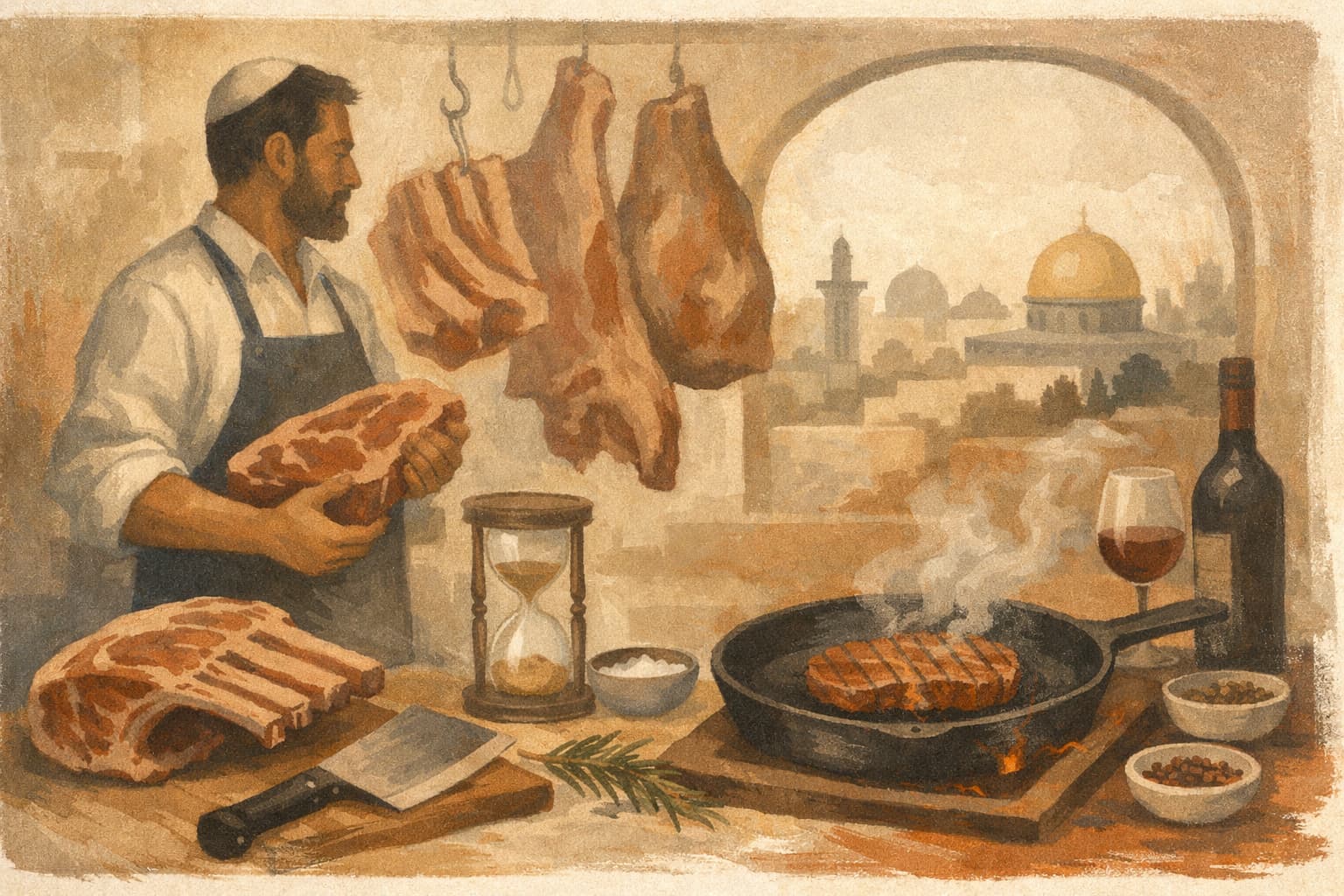
Jerusalem Butcher Avi Ben David on Choosing, Cooking, and Aging Beef

Avi Ben David, a veteran Jerusalem butcher behind the IWO’S beef brand, has become a social media educator after years of answering customers’ questions at the counter. Through short, direct videos created with his daughter Roni, who now handles the content, he teaches hundreds of thousands of viewers how to choose meat, what marbling means, why a pan must be blazing hot, and why simplicity often beats tricks.
Ben David says his path began after military service, when he bought a small delicatessen and later spent three years commuting between Tel Aviv and Munich to learn European butchery. He studied breeding, slaughter, aging, precise cutting, dry aging and vacuum aging, and brought that knowledge back to Israel. About 25 years ago, when burgers were still seen as industrial junk food, he began making a “ground steak” from premium cuts, which became IWO’S, now operating in several locations, including Jerusalem, Tel Aviv and the Port Market branch in Tel Aviv under chef-butcher Raam Azoulay.
He also recalls his role in the 2008 fight over selling hametz during Passover in Jerusalem. After a court ruling allowed it, he told ynet, “We sold it and we will keep selling it, and they should leave us alone,” saying the issue was about freedom to work, earn a living, and serve customers. He says he does not feel like an internet celebrity, though strangers now recognize him, including security officers at Ben Gurion Airport and a religious father in Jerusalem who said he follows the recipes.
For home cooks, Ben David stresses trust in the butcher, bright fat, visible marbling, and avoiding meat that looks dark, bloody on the tray, or ringed with gray, which may suggest thawed frozen meat. He recommends quick-cooking cuts such as loin, fillet and ribs for steak, and tougher working muscles for long braises. He prefers quality salt, minimal seasoning, no pressure on the meat, a screaming-hot pan or plancha heated for five to ten minutes, and resting steak four to six minutes before slicing. He says burgers should be treated like steak, made with 20 to 25 percent fat, coarse ground from cuts like chuck, brisket or short rib, shaped and chilled before cooking, and served medium. His core message is that good beef starts long before the pan, with breeding, feed, slaughter and transport, not just with the final sear.


