
Air Canada captain falls ill midflight, forcing emergency landing in Boston
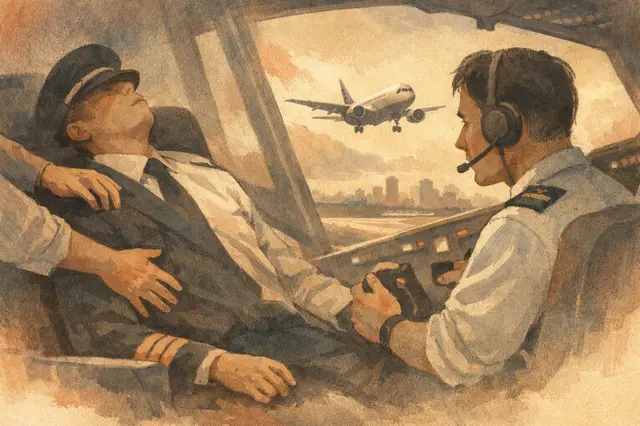
An Air Canada regional flight from Newark, New Jersey, to Halifax, Nova Scotia, was diverted on Wednesday after the captain suffered a serious medical emergency in the air. Passengers said the plane lurched sharply for minutes before the crew brought the situation under control, and the flight ultimately made an emergency landing in Boston.
The flight, AC2259, was operated for Air Canada by PAL Airlines on a de Havilland Dash 8-400. It left Newark at 12:39 p.m. with 61 passengers on board, including families with children. Rodney Macdonald, who was traveling with his wife and two sons, said, “I knew something was wrong because this was not normal turbulence.” He added that the movement made passengers realize immediately that this was an unusual event.
According to passengers, a flight attendant removed the captain from the cockpit once it became clear he could not continue flying. Macdonald said passengers helped restrain the captain with seat belts for about 40 minutes, explaining, “It was clear he was not in control of his abilities and had to be restrained.” Flight data showed police and airport officials were alerted to an emergency at 1:40 p.m., and the aircraft landed at Boston Logan International Airport shortly before 2 p.m. A radio recording quoted in the report said, “The pilot is incapacitated. The aircraft is being flown by the first officer.”
Ambulances met the aircraft after landing, and the captain was taken for medical treatment, though no further details on his condition were released. The passengers continued to Halifax on a replacement flight that departed at 7:30 p.m. and arrived shortly before 9:30 p.m. Air Canada said the captain experienced a medical issue and was removed from the cockpit in line with safety procedures, while the first officer handled the diversion and landing professionally.
The same event, reported separately by each outlet. Open a few to compare what different newsrooms emphasize — and what they leave out.

Not the same event — other stories that share this one’s people, places, or theme: background, reactions, and follow-ups.



Ask About This Article
Duki reads it, and every newsroom on the same story, then answers with sources.