
State Archive Releases Full Entebbe War Cabinet Records for the 50th Anniversary
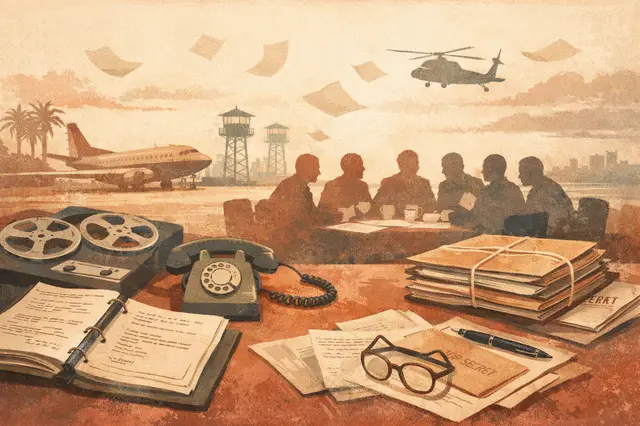
On the 50th anniversary of Operation Entebbe, the State Archive in the Prime Minister’s Office on Friday released a large new collection of thousands of pages, including the full minutes of cabinet meetings, ministerial security discussions, and consultations of the special security team that Prime Minister Yitzhak Rabin formed on the day of the hijacking. The archive also published the complete files on the operation, some of them previously known, presenting what it calls the full picture of one of Israel’s defining events.
The documents reveal the doubts, fears, and alternatives that were weighed before the rescue mission, including a dramatic earlier episode in Nairobi, Kenya, that was directly linked to the Entebbe affair. The collection also includes a candid conversation in which Rabin asked newspaper editors to avoid publishing details that could endanger the hostages. The archive says the material sheds light on the decision-making process that ultimately led to the successful raid.
The crisis began on Sunday, June 27, 1976, when Rabin told the cabinet that contact with an Air France plane flying from Israel to Paris had been lost after a stopover in Athens. He said the aircraft had probably been hijacked. Later in the meeting he said the plane had landed in Benghazi, Libya, though the destination, the hijackers, and their intentions were still unclear. Rabin rejected a suggestion to inform the cabinet secretary of ministers’ later movements, saying there was no need and that France should be held responsible for the fate of the Israeli passengers.
At 4 p.m. that day, Rabin convened a special ministerial team that included Defense Minister Shimon Peres, Foreign Minister Yigal Allon, Justice Minister Haim Zadok, Transport Minister Gad Yaacobi, and Minister without Portfolio Israel Galili. The group met 18 times in the following days, sometimes with senior security officials. As negotiations dragged on, non-Israeli hostages were separated from the Israelis and then released, which deepened the sense that other options had to be explored more urgently. On Wednesday, July 1, Israel, which had avoided negotiating with terrorists, said it was willing to enter talks over the hostages.
The archive also released 26 recorded calls between Eli Mizrahi and the prime minister, the Foreign Ministry director-general, and others, plus five call transcripts of Col. Baruch Bar-Lev with Uganda’s ruler Idi Amin as part of an effort to use their earlier connection to help resolve the crisis. Another file contains an interview with hostage Itzhak David, a Holocaust survivor who was deeply affected by the separation of the Israeli hostages from the others. The collection further includes correspondence with France and other affected countries, material on UN Security Council discussions, hundreds of letters sent to Rabin after the raid, newly cleared photographs, files on films about Entebbe, and later records on the memorialization of Lt. Col. Yonatan Netanyahu.
The same event, reported separately by each outlet. Open a few to compare what different newsrooms emphasize — and what they leave out.







Not the same event — other stories that share this one’s people, places, or theme: background, reactions, and follow-ups.
Ask About This Article
Duki reads it, and every newsroom on the same story, then answers with sources.