
Leading Rabbis Back Call for Silent Study Periods in Israeli Yeshivot
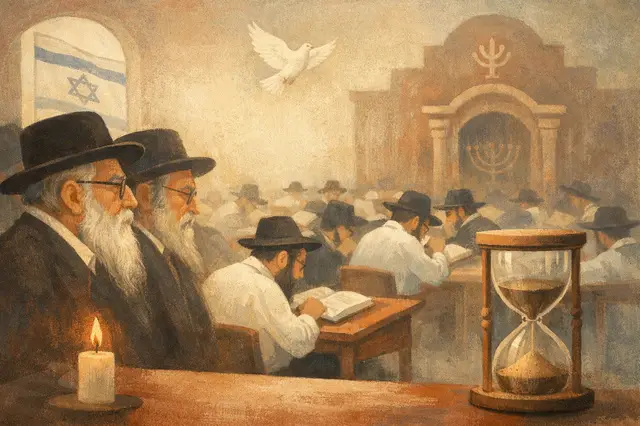
Leading rabbinic figures in Israel’s Council of Torah Sages have joined a call by Yeshiva head Rabbi Moshe Hillel Hirsch for kollel students to observe a half-hour of silence at the start of study sessions through the High Holidays. Hirsch had earlier sent a special letter to tens of thousands of kollelim students in Israel before departing for the United States to support the World Torah Fund he heads, arguing that the effort would help Jews defeat those who fight against Judaism.
In his letter, Hirsch urged every avrech to arrive from now until the end of the Yamim Noraim and keep a “tefillat d’mam” of 30 minutes, saying the practice is difficult and therefore an act of self-sacrifice that would bring great sanctification of God’s name and draw divine assistance. He wrote that without special divine help, victory against the “enemies” would not be possible, and called on kollelim heads to speak about the matter.
The new letter, published widely in kollelim, says the signatories fully join Hirsch’s appeal to establish special study discipline in all kollelim in Israel and to learn continuously and in complete silence for at least the first half hour of first seder until the High Holidays. The rabbis also blessed the nation, saying the merit would protect כלל ישראל amid harsh persecutions and recurring troubles.
The statement is presented as a continuation of a special gathering at Hirsch’s home before he left for America, attended by dozens of kollelim heads from across the country. Among the signatories are Rabbi Moshe Tzvi Bergman, Rabbi Dov Povarsky, Rabbi Aryeh Finkel, Rabbi Dov Cohen, and Rabbi Yaakov Adas Finkel. Another similar letter was sent by Rabbi Moshe Sternbuch, who linked the call for strengthening to the war against Amalek. A further event with kollelim heads and rabbis is planned at the home of Rabbi Dov Lando, where additional calls for strengthening and commitments are expected.
The same event, reported separately by each outlet. Open a few to compare what different newsrooms emphasize — and what they leave out.

Not the same event — other stories that share this one’s people, places, or theme: background, reactions, and follow-ups.
