
Israel Faces a Deepening Trap in Lebanon Amid Diplomatic Pressure
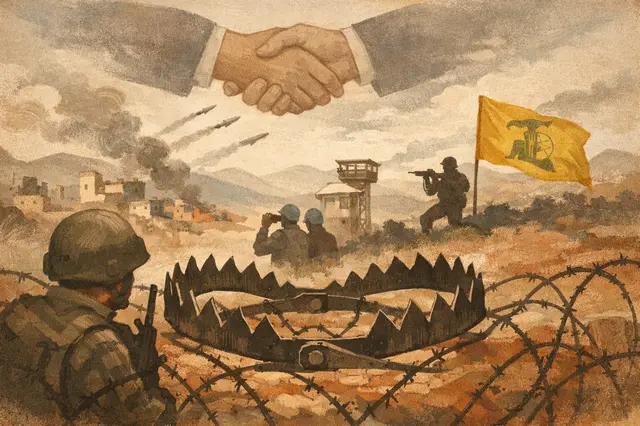
Israel is being pulled deeper into the Lebanese quagmire while sensitive diplomatic talks in Washington leave its forces with no clear exit. The article says the northern front is shifting from relative quiet to artillery fire, and that Israeli gains are being swallowed by what it calls a dangerous, muddy stalemate. It argues that the situation is being shaped by an emerging U.S.-Iranian understanding that Jerusalem sees as a capitulation to Tehran.
According to the piece, current American thinking is putting Israel in an untenable position, especially as Iran strengthens its grip, Syria remains unstable, and Hezbollah in Lebanon grows bolder. It says some of the ideas discussed in closed channels, including relying on Syria to deal with Hezbollah, show a troubling disconnect from battlefield reality. The article also claims that Qatari mediators are being elevated into peacekeepers, while Israeli security officials view the draft arrangements as detached from conditions in southern Lebanon.
The article says foreign reports describe a proposal in which Israel would look away from Hezbollah logistics infrastructure in exchange for vague promises of calm. It adds that Israeli troops have advanced to key areas north of Beaufort, especially near the Ali Tahar ridge, which it describes as threatening Hezbollah’s command and logistics center in southern Lebanon. Because of that, it says a larger confrontation is only a matter of time.
On the ground, the article says the IDF is being held to static defense because of political constraints tied to the talks in Washington. It reports that the army fears a sudden withdrawal, possibly under U.S. pressure, and that a new “deconfliction cell” is being set up without Israeli participation under Qatari and Pakistani auspices. It also says international monitoring, including UNIFIL, the Americans, the French, and the framework of UN Security Council Resolution 1701, has failed to stop Hezbollah from rearming or building new infrastructure.
The piece concludes that Israel now faces a decisive choice: prolong the presence in southern Lebanon at the cost of exhaustion and diplomatic strain, or withdraw in a way that could let Hezbollah rebuild as it did after 2000. It says only a combination of limited military presence, stronger enforcement mechanisms, and aggressive diplomacy can prevent renewed escalation.
The same event, reported separately by each outlet. Open a few to compare what different newsrooms emphasize — and what they leave out.


Not the same event — other stories that share this one’s people, places, or theme: background, reactions, and follow-ups.

