Israel Restores Water Supply to Southern Agriculture After Desalination Plant Issues

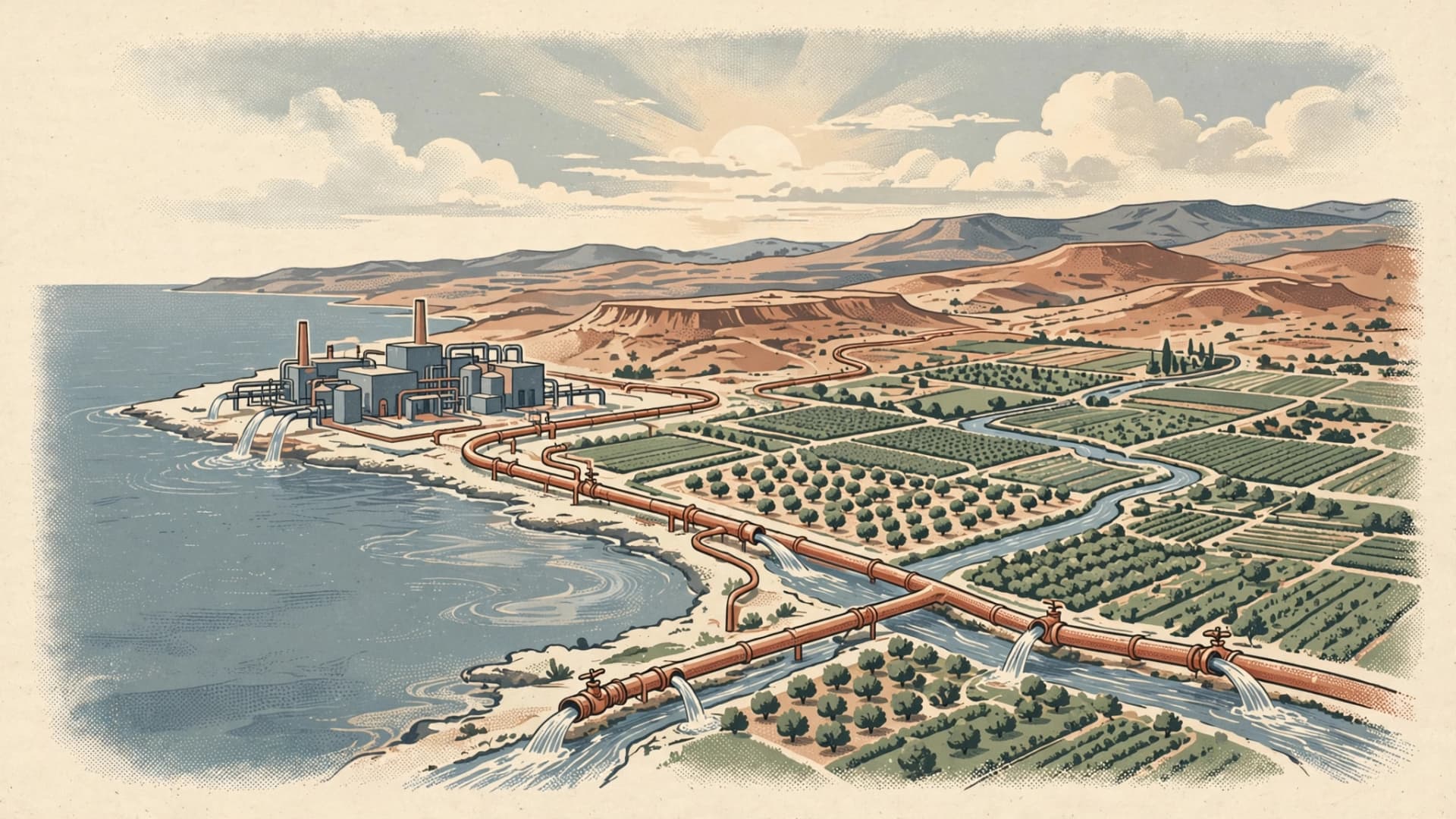
Water supply to agriculture in southern Israel has been restored after a disruption caused by unusually high turbidity in seawater, which had temporarily shut down most of the country's desalination plants. The resumption of service was made possible by the partial return to operation of several desalination facilities and increased pumping from the Sea of Galilee and groundwater wells. Water supply to households across Israel remained unaffected throughout the crisis.
The restoration followed intensive efforts by professionals from the Water Authority, Mekorot (the national water company), and the Ministry of Energy and Infrastructure. Pumping from wells and the Sea of Galilee was intensified, and efforts were made to replenish water reservoirs depleted by the reduced output from desalination plants.
Energy Minister Eli Cohen stated that despite the "unusual natural phenomenon," Israel's water sector demonstrated its resilience. The disruption began several days prior due to weather conditions that caused sediment and debris to enter the Mediterranean Sea, leading to high turbidity. Five of Israel's six major desalination plants, located in Ashkelon, Ashdod, Palmahim, and Sorek (two plants), were shut down, while the Hadera plant continued to operate, along with facilities in Eilat and local Mekorot plants.
An additional wave of turbidity from the direction of the Egyptian coast caused a renewed shutdown of most facilities. This forced the Water Authority to reduce the supply of potable water to agriculture, particularly in the southern region, with some areas in the Negev region experiencing a complete cutoff. The Ministry of Agriculture expressed significant concern, with reports of severe shortages affecting vegetable fields and greenhouses, potentially causing irreversible damage to young plants and sensitive crops. Approximately 20,000 dunams (about 5,000 acres) of vegetable crops in the Negev were at risk.
While the primary focus was on restoring agricultural supply, the water sector prioritized maintaining household supply, preventing widespread outages. Initial concerns about a potential cyberattack were dismissed by the National Cyber Directorate and professional bodies, which confirmed the issue was environmental, stemming from seawater quality. Despite the restoration, local authorities have been asked to continue limiting water for public gardening to conserve reservoirs and ensure essential supply continuity. The Water Authority, Mekorot, and the Ministry of Energy are closely monitoring the system and desalination plant operations.
The same event, reported separately by each outlet. Open a few to compare what different newsrooms emphasize — and what they leave out.


Not the same event — other stories that share this one’s people, places, or theme: background, reactions, and follow-ups.

